
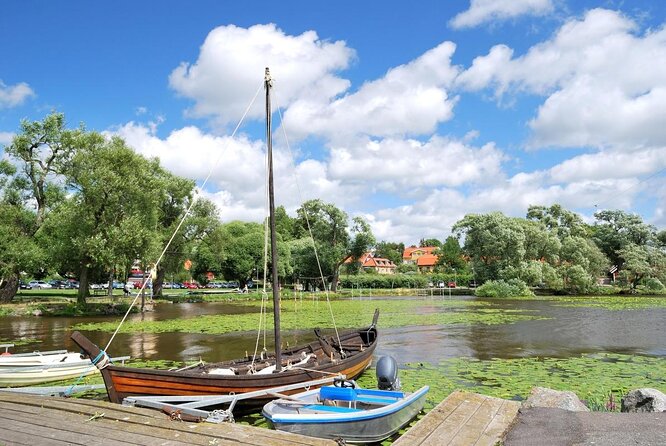
Reviewed · VIKING HISTORY TOURS
Private Half Day Tour: Viking History Trip from Stockholm Including Sigtuna
The most revealing part of this tour is not a grand Viking museum. It is the quiet countryside north of Stockholm, where original runestones, grave fields, and church ruins sit beside ordinary roads and walking paths. At Broby Bro, you meet Estrid, a Viking woman remembered in the stones, then follow the trail through Täby, Arkils tingstad, and Sigtuna.
I like two things here. First, the private vehicle and guide let you ask questions and adjust the pace. Second, the stops build a useful story: family and trade at Broby Bro, power and roads at Jarlabanke, law at Arkils tingstad, and Christianity in Sigtuna. The main drawback is simple: this is an interpretation-heavy tour, not a day of towering ruins. If you expect Rome-sized remains, the price may feel high.
Key points before you book
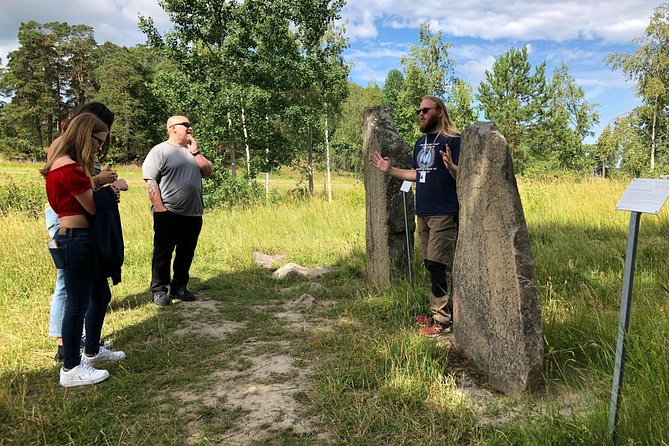
- Estrid’s runestones at Broby Bro: See stones connected with one of the best-known Viking women in the area, along with a grave field.
- A private route beyond Stockholm: Round-trip transport keeps you from working out rural bus connections or driving yourself.
- Three different Viking sites: Broby Bro, Jarlabanke, and Arkils tingstad each explain a different part of Scandinavian life.
- Sigtuna adds medieval depth: Walk the old wooden town, see church ruins, and visit Mariakyrkan if it is open.
- A guide makes the difference: Olof, Jakob, Gustav, Gabriel, Calle, Yonatan, and others have been praised for clear stories and flexibility.
- Five hours means a brisk pace: You get a useful introduction, but lunch and walking time are limited.
What this private Viking tour is really about
This excursion takes you out of central Stockholm and into Uppland, a region filled with runestones and early medieval sites. You are not simply checking off monuments. You are trying to read a society through short carved messages, burial grounds, roads, meeting places, and the first stone churches.
The guide supplies the missing pieces. A runestone can look like a tall gray slab until you learn who raised it, whom it remembers, and what its inscription says about travel, family, religion, or status. The tour also explains that Viking was a verb connected with going on an overseas expedition, not the name of a uniform people who all lived the same way.
That context matters because the physical remains are modest. There are no vast palaces here. The interest comes from connecting scattered clues, and that is where a good guide such as Olof, Jakob, Gustav, Gabriel, or Calle can transform the day.
The tour is private, with a maximum of 16 people, and only your party participates. In practice, that gives you room to ask about subjects that catch your attention. One group customized parts of the visit around its interests, which is one of the clearest advantages over a fixed coach excursion.
More History Tours in Stockholm
- Stockholm: Ghost Walk and Historical Tour
★ 4.7 · 2,206 reviews - The Original Stockholm Ghost Walk and Historical Tour – Gamla Stan
★ 4.5 · 1,165 reviews - Stockholm: Old Town Historical Walking Tour
★ 4.9 · 344 reviews
Broby Bro and the story of Estrid
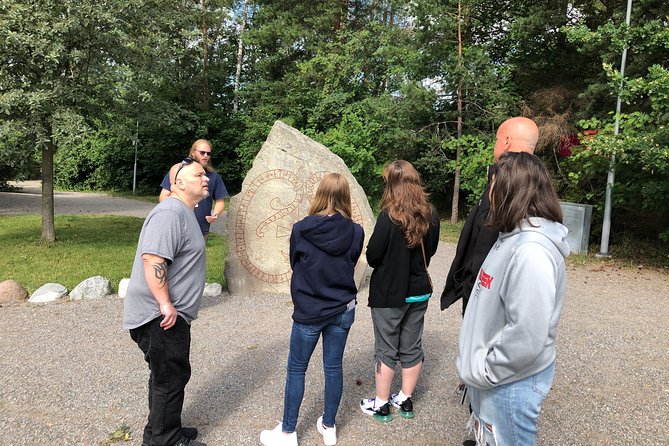
The first major stop is Broby Bro, where you spend about 55 minutes. You see a Viking grave field and three important runestones, including one connected with Jerusalem and with Estrid, a prominent woman in the local story.
This is a strong opening because it moves the Viking age away from the usual image of raiders and ships. The stones point toward family, remembrance, faith, and long-distance connections. Estrid gives the guide a human subject to follow, while the grave field helps you picture the community that lived and died here.
You will spend time learning how runestones work, why they were raised, and what they can tell you about daily life in Scandinavia. Some visitors found the burial stones especially striking once the guide explained their meaning. That is the key point: the site is not visually overwhelming on its own, so listen closely to the story.
The stop is outdoors and includes walking around the grave field. Wear shoes suited to uneven ground and bring a layer suited to the weather. The tour information lists admission as free, but the cost of the experience comes from the private transport and guiding rather than entrance fees.
Jarlabanke’s road and the power of a Viking lord
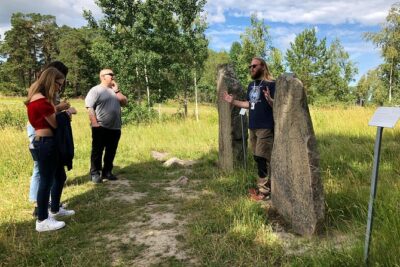
At Täby, the Jarlabanke Runestones receive about 20 minutes. The stones sit by a reconstructed Viking causeway, giving you a clearer sense of how roads and crossings shaped local power.
Jarlabanke was a Viking lord, and the site lets the guide discuss people who controlled land, labor, and movement. You hear about Viking roads, trading networks, and the public way powerful families used stone inscriptions to announce their influence.
This is the shortest stop, so expect a focused explanation rather than a long walk. I see its value in the way it links the stones to infrastructure. A causeway is not just scenery. It helps explain why a person with resources could make a mark that lasted for centuries and connect settlements across the region.
If you want detailed time at every inscription, 20 minutes may feel tight. Still, the stop works well in a half-day route because it adds a different angle without taking time away from Sigtuna.
Arkils tingstad and Viking law
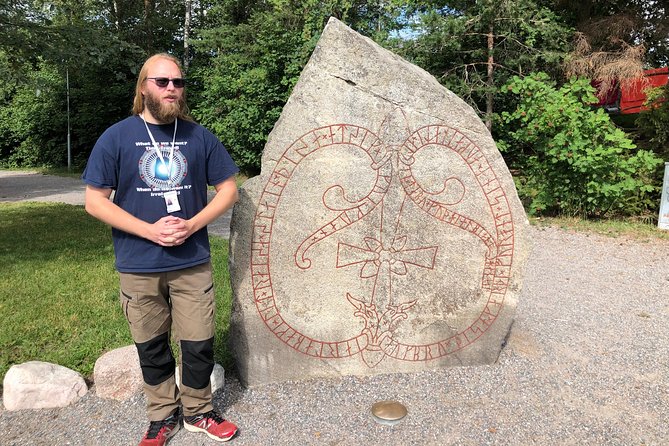
Arkils tingstad is scheduled for about 55 minutes and is one of the most important stops for understanding Viking society. This is a well-preserved assembly place, or Thing site, with runestones connected to the Skålhamra family.
The Thing was a meeting place where local people dealt with law, disputes, decisions, and political power. The guide discusses Viking customs, laws, and the role of assemblies in a society that did not operate through modern courts or town halls.
This stop gives the tour needed balance. Without it, you could leave thinking the Viking age was mainly about burial customs and overseas raids. At Arkils tingstad, you see how communities organized themselves and how families gained influence by helping create public places.
The site also rewards questions. Ask about who could take part, how decisions were made, and what the stones say about the people who paid for them. The exact depth will depend on your guide and your interests, but a private format makes this a good place to slow down and ask for clarification.
More day trips to Sigtuna and Uppsala:
- Viking History, Runes & Countryside 9h Tour to Sigtuna & Uppsala
★ 4.5 · 283 reviews - Viking History and Swedish Countryside Tour to Sigtuna & Uppsala
★ 4.5 · 162 reviews - From Stockholm: Uppsala and Sigtuna Viking Sites Tour
★ 4.7 · 157 reviews - Viking History Small Group Tour from Stockholm: Half Day Including Sigtuna
★ 4.5 · 111 reviews
Lunch and the first capital at Sigtuna
The route then reaches Sigtuna, a small historic town on the water and one of the best-known early towns in Sweden. The lunch stop lasts about 40 minutes, and you pay for your own meal.
That timing is practical but not generous. You have enough time for a straightforward meal, but not for a long, relaxed restaurant break. One especially positive detail from the experience is the mention of Swedish meatballs at a quaint local place. Sigtuna also has a candy and chocolate shop that can work for small gifts, though shopping is not the main purpose of the visit.
The guide presents Sigtuna as Sweden’s first capital, a place where excavations have revealed clues about early urban life. The town’s importance helps tie the rural sites together. You have already seen the people, families, roads, and assemblies surrounding the region. Now you see the town that formed part of the wider political and religious network.
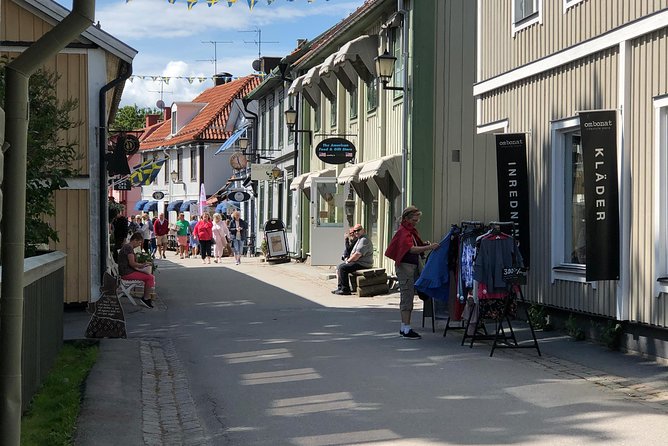
After lunch, you walk along the main street through the wooden town. Its curved Viking-era street pattern is still visible, an easy detail to miss if you explore without context. The town is pleasant to walk, but do not expect a large open-air Viking settlement. Its appeal is the mix of old street lines, later buildings, church remains, and stories layered over time.
Sigtuna’s church ruins and Mariakyrkan
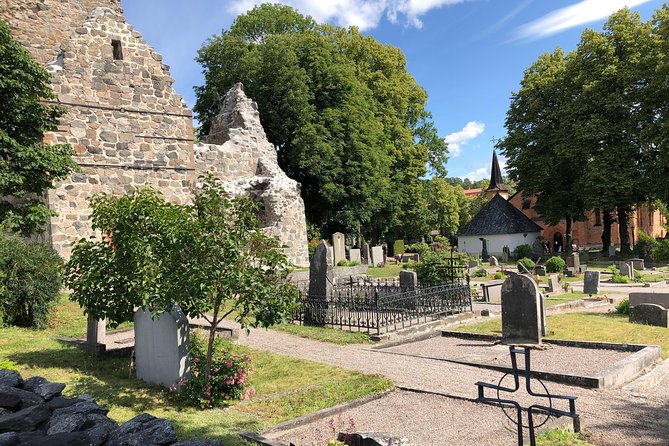
The second Sigtuna visit lasts about 40 minutes and focuses on historic highlights, including church ruins and Mariakyrkan if the church is open. This section shifts the story from pagan-era customs and local power toward Sweden’s Christian period.
Mariakyrkan is described as the surviving reminder of a powerful monastery just outside the town. Entering depends on opening conditions, so treat it as a possibility rather than a guarantee. One group happened to enter a church that had been closed for years during renovation, but that was an unusual opportunity, not something you should count on.
The church material is useful because it shows change rather than a clean break. Runestones sometimes reflect Christian ideas, while later churches were built close to places that had already mattered to local communities. Your guide can help connect those periods without treating the Viking age and medieval Sweden as separate worlds.
Sigtuna’s ruins are not enormous. One visitor felt there was not much to see for the price, and that is a fair warning if your main interest is architecture on a grand scale. I would book this part for the stories, the old street plan, and the relationship between early town life and religion.
S:t Olofs Church Ruins in ten minutes
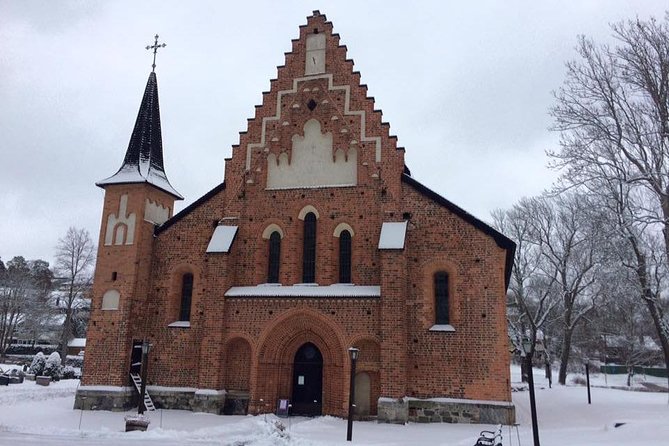
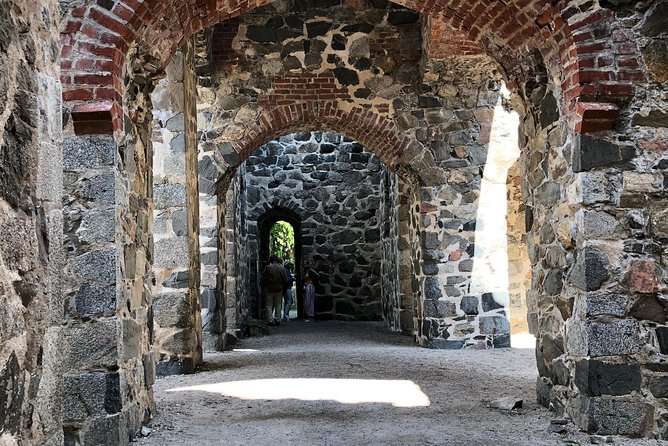
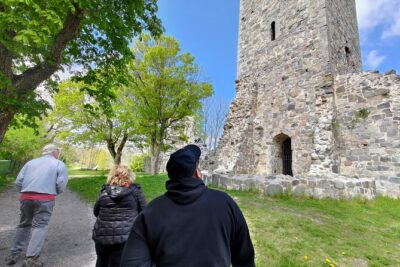
The final historical stop is S:t Olofs Church Ruins, scheduled for about 10 minutes. It is described as the largest and best-preserved of the three main church ruins around Sigtuna and the oldest of them, with construction dated to roughly 1080 to 1120.
The church was built around a holy well, giving the site another link between older sacred traditions and Christianity. Ten minutes is enough for an introduction and photographs, but not a long examination of the masonry.
I like this quick stop because it gives the day a clear final chapter. You begin with graves and runestones, then move through law and settlement before reaching early churches. The sequence helps you understand how the region changed across generations.
The guide can make or break the day
The strongest praise has gone to the guides’ storytelling, historical command, and willingness to answer questions. Olof has been singled out for explaining runestones and Viking life. Jakob was praised for bringing ruins to life and responding patiently to questions. Gustav, Gabriel, Calle, and Yonatan have also been described as engaging and well prepared.
You should also know about a possible communication concern. One couple found a guide’s strong accent difficult to understand, especially alongside hearing difficulties. The company indicated that it can sometimes assign a guide who has lived in the United States and has less of an accent, so contact the operator in advance if clear speech is especially important to you.
The private setup helps, but it does not remove the need to speak up. Tell the guide if you want more detail at a runestone, less time in a shop, or extra explanation about Viking law. The best version of this tour is conversational rather than passive.
Time, transport, and the $532.19 price
The listed price is $532.19 per person for about five hours. That is a serious price, especially because lunch and site admissions are not additional inclusions, though the listed outdoor stops are free.
I would judge the value by group size. For two people, the cost is difficult to call inexpensive. You are paying for a private vehicle, a dedicated guide, rural transport, and a route that would be awkward to assemble independently in half a day. For a larger private group, the per-person value improves, especially if everyone wants the same focused history experience.
Pickup is offered from central Stockholm hotels, ports, and accommodations. The information gives a 3-kilometer limit in the pickup details and also refers to pickup within 5 kilometers in the inclusions, so confirm your exact address before booking. Nynäshamn is not included. If your ship docks there, you need to reach a meeting point in central Stockholm by train or cruise bus.
Cruise-port instructions are detailed for Stadsgården, Frihamnen, and Värtahamnen. The guide carries an A4 sign marked Viking Tours. Confirm your ship’s pier with the cruise line, since the meeting instructions depend on the exact berth.
The start time is 9:30 a.m., with return to Stockholm in the early afternoon. Traffic can change transfer times. Pickup removes much of the hassle, but it also means the day follows Stockholm traffic rather than a fixed travel time.
Who should book this experience?
I would choose this tour if you want to see Viking sites outside Stockholm but have only one morning or half-day available. It suits history-minded visitors who enjoy short walks, outdoor monuments, careful explanation, and a town visit with lunch.
Families can participate, as long as children are accompanied by an adult. Most people can take part, and the route is near public transportation, though the experience itself relies on private vehicle transfers.
I would be more cautious if you want reconstructed Viking houses, battles, costumes, or large museum displays. The planned route is based on real sites and remains, not a theme-park version of the Viking age. One longer nine-hour option was recommended by a guide for people who want more time, so consider asking about that if five hours feels too compressed.
Free cancellation is available up to 24 hours before the start time. A minimum of two people is required, and if the operator cancels because that minimum is not met, you are offered another date or a full refund.
Should you book the Viking History Trip from Stockholm?
Book it if the meaning behind a runestone interests you as much as the stone itself. The route gives you three different Viking-age settings, a useful introduction to Estrid and Jarlabanke, a look at an assembly site, and a graceful finish in Sigtuna’s streets and church ruins.
Skip it if you want dramatic ruins or a cheap sightseeing outing. At $532.19 per person, the cost demands genuine interest in the subject. For the right audience, the private format, rural access, and strong guide-led storytelling make this a thoughtful way to meet Sweden’s Viking past beyond Stockholm’s city center.
FAQ
How long is the private Viking tour from Stockholm?
The tour lasts approximately five hours, with a 9:30 a.m. start and a return to Stockholm in the early afternoon.
What sites are included?
The route includes Broby Bro, the Jarlabanke Runestones in Täby, Arkils tingstad, Sigtuna, Sigtuna’s church ruins, and S:t Olofs Church Ruins.
Is lunch included?
No. Lunch in Sigtuna is at your own expense.
Is hotel pickup available?
Pickup is available from central Stockholm hotels, ports, and other accommodations. The pickup details specify locations within 3 kilometers of Stockholm Central Station, while the inclusions refer to a limit of 5 kilometers, so confirm your address before booking.
Can cruise passengers take this tour?
Yes, pickup instructions are provided for Stadsgården, Frihamnen, and Värtahamnen. Pickup is not included at Nynäshamn Harbour, so you must reach a meeting point in central Stockholm.
Is this a private tour?
Yes. Only your group participates, with a maximum group size of 16 people.
What language is the tour offered in?
The tour is offered in English.
What is the cancellation policy?
You can cancel up to 24 hours before the start time for a full refund. Cancellations or changes made less than 24 hours before the start time are not refunded or accepted.
More History Walks in Stockholm
- Stockholm Old Town Gamla Stan, Historic Walking Tour, Small group
★ 5.0 · 54 reviews - 3-4h Viking History Short Day Tour from Stockholm
★ 5.0 · 41 reviews - Stockholm: Sigtuna and Uppsala Viking History Day Tour
★ 4.7 · 41 reviews - From Stockholm: Viking Culture and Heritage Small Group Tour
★ 4.7 · 29 reviews
More Viking History Days from Stockholm
- Entrance ticket to The Viking Museum
★ 4.0 · 301 reviews - Full Day Viking Tour with Fika Swedish Coffee Break
★ 4.5 · 81 reviews - From Stockholm: Viking Culture Guided Tour with Transfer
★ 4.5 · 81 reviews - Private Full Day Viking History Tour from Stockholm Including Sigtuna and Uppsala
★ 5.0 · 51 reviews
Just added around Stockholm
- World War II Stockholm Old Town Walking Tour and Army Museum★ 4.6 · 4 reviews
- Stockholm: Archipelago Guided Boat & Walking Tour of Vaxholm★ 3.1 · 23 reviews
- Vaxholm & Stockholm Archipelago: Guided Excursion, Day Trip★ 4.8 · 41 reviews
- Stockholm: Underground Metro Art Ride with a Local Guide★ 4.6 · 39 reviews
- Minivan Arrival Transfer Stockholm Airport ARN to Stockholm City★ 4.5 · 8 reviews
- Airport Transfer: Airport ARN to Stockholm by Business Car★ 4.0 · 3 reviews
- Arlanda Express Train Airport and Stockholm City Transfer★ 5.0 · 3 reviews
- Traditional Persian Cooking Class in Stockholm with a Local★ 5.0 · 20 reviews
Viking History Tours, compared.
Viking History, Runes & Countryside 9h Tour to Sigtuna & Uppsala
Read our review →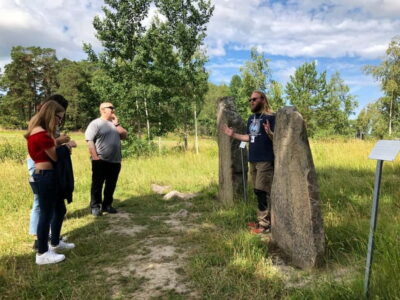
Stockholm Viking History Full Day Tour to Sigtuna + Uppsala
Read our review →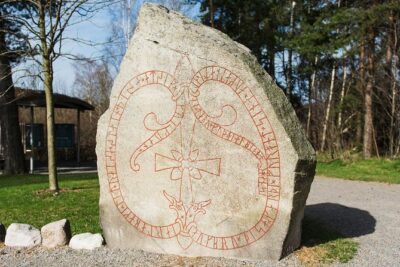
Viking History and Swedish Countryside Tour to Sigtuna & Uppsala
Read our review →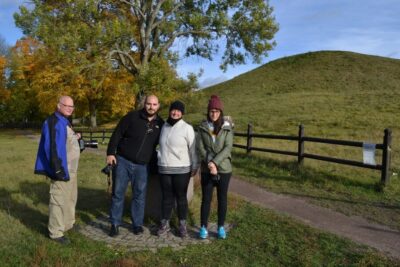
Viking History Small Group Tour from Stockholm: Half Day Including Sigtuna
Read our review →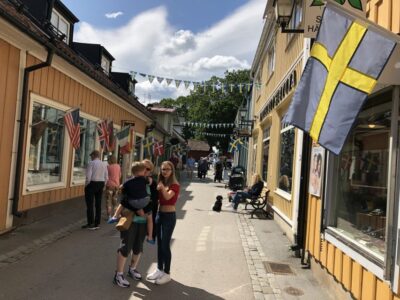
Full Day Viking Tour with Fika Swedish Coffee Break
Read our review →Browse the lists this tour appears in