
Reviewed · VIKING HISTORY TOURS
From Stockholm: Viking Culture and Heritage Small Group Tour
The most rewarding part of this tour is that it takes you beyond Viking legends and television drama to real sites in Uppland. You’ll see burial grounds, raised runestones, an ancient causeway, and the remains of a Viking parliament, all within a short drive of Stockholm.
I like the way the tour connects ordinary objects to daily life. A stone with carved runes becomes evidence of family, faith, travel, and power. I also like the small-group format, which keeps the outing personal and makes it easier to ask questions. The main drawback is the short three-hour schedule. You get a strong introduction, but not a full day of archaeological exploring.
Key points to know before booking
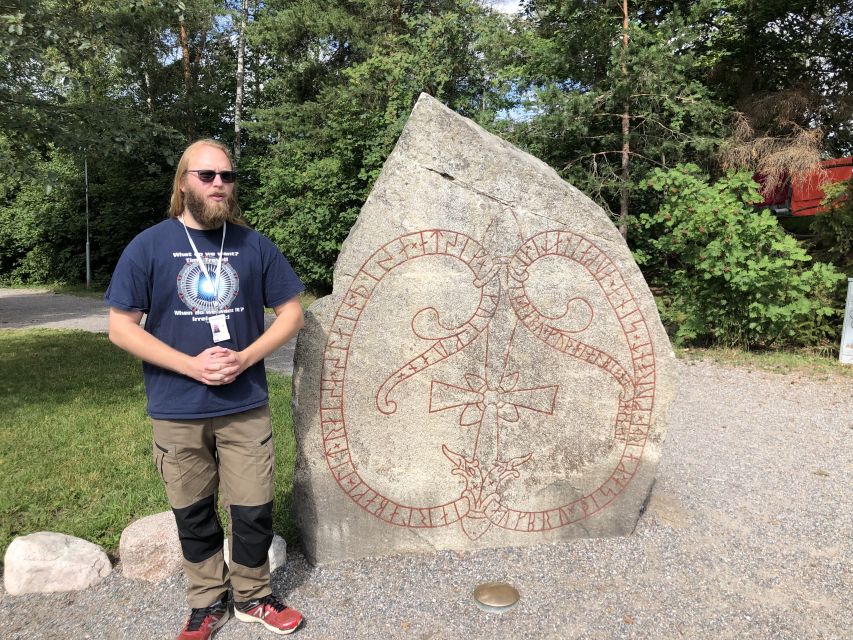
- Broby bro reveals Viking burial customs: See the burial ground linked to Estrid, a powerful Viking woman, and learn how pagan and Christian traditions met.
- Jarlabanke Bridge is more than a bridge: Raised runestones and the old causeway show how Viking leaders marked roads, land, and public works.
- Arkils tingstad explains Viking politics: The remains of this assembly place offer a useful look at how disputes and decisions were handled.
- The tour leaves central Stockholm quickly: Hotel pickup is available within 5 kilometers of Stockholm Central Station.
- You see authentic places rather than a staged attraction: Expect outdoor sites, old stones, graves, and countryside, not costumes or theatrical displays.
- Winter requires serious clothing: A January visit included snow, a frozen lake, and temperatures near minus 10 degrees Celsius, so warm boots and proper layers matter.
Leaving Stockholm for Viking country
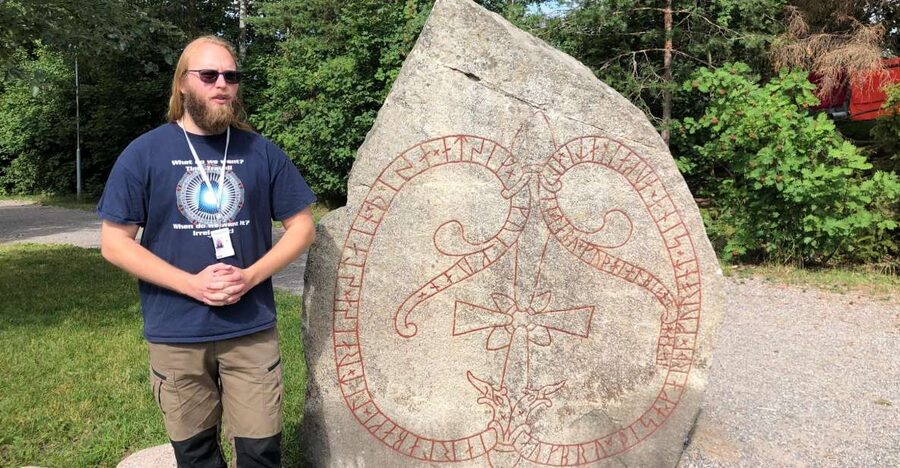
Stockholm is full of museums that tell Sweden’s Viking story, but this excursion gives you something a museum cannot: the places themselves. After pickup at your hotel or accommodation within 5 kilometers of Stockholm Central Station, you head into the countryside of historic Uppland.
The drive is part of the lesson. Your guide uses the journey to explain the people who lived in this area, how they traveled, and how local families gained influence. The route takes you away from city streets and toward small communities, woodland, open countryside, and sites connected with the Viking Age.
The tour is led in English, and the group is limited to 16 people. That is small enough for a guide to answer questions without turning every stop into a crowd-control exercise. Erik is one guide associated with the experience, and his explanations cover Norse society, local stories, and Swedish food recommendations as well as the main archaeological sites.
You should expect a historical outing rather than an entertainment show. The focus is on physical evidence and careful explanation. If your idea of Viking history comes mainly from television, this tour gives you a useful correction. The Vikings were not simply raiders in horned helmets. They were farmers, traders, builders, political players, settlers, and members of extended families with strong local ties.
More History Tours in Stockholm
- Stockholm: Ghost Walk and Historical Tour
★ 4.7 · 2,206 reviews - The Original Stockholm Ghost Walk and Historical Tour – Gamla Stan
★ 4.5 · 1,165 reviews - Stockholm: Old Town Historical Walking Tour
★ 4.9 · 344 reviews
Broby bro and the burial ground of Estrid
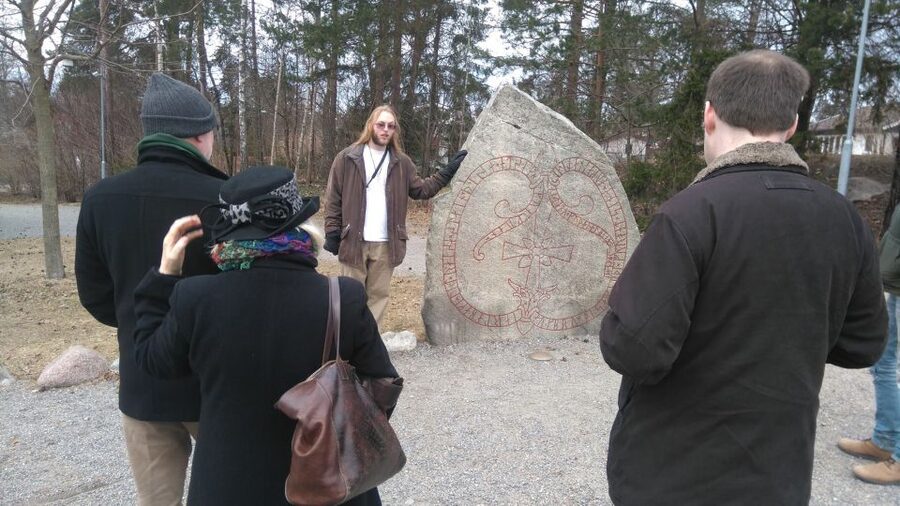
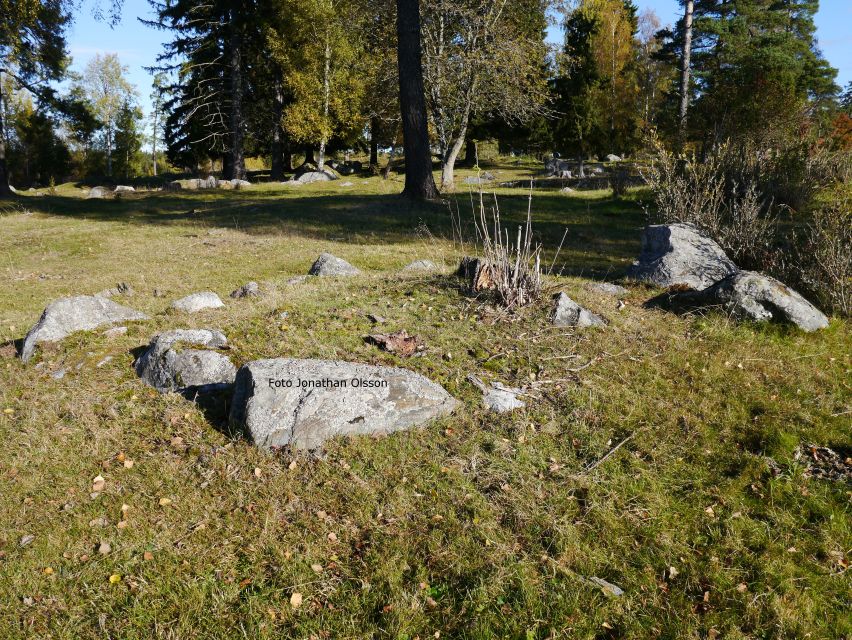
The first major stop is Broby bro, also known as the Jarlabanke Runestones burial ground. This is one of the most meaningful parts of the route because it brings family history into view.
Here you learn about Estrid, a prominent Viking woman connected with the area. Her story helps correct another common misunderstanding: Viking women were not invisible figures standing behind male warriors. Some women owned property, managed households, shaped family alliances, and were remembered publicly through runestones.
The burial ground also opens a window onto changing religious practice. Your guide explains pagan burial customs and the later spread of Christianity, showing how these traditions could overlap during the conversion period. That transition was not a clean switch from one belief system to another. Families and communities changed gradually, and the stones and graves help you see that process in a local setting.
The site is outdoors, so your experience will depend on the season. In summer, the countryside should make the stop pleasant and easy to explore. In winter, the setting can be striking, with snow and frozen water nearby, but the cold can become a genuine problem. One January visit took place at about minus 10 degrees Celsius, and proper winter footwear was essential.
Bring insulated boots, warm socks, gloves, and several layers if you visit during the colder months. The tour does not include food, and there is no mention of a meal stop, so eat beforehand and carry water. Three hours is not a long time, but cold weather can make even a short outdoor visit feel much longer.
Reading the 1,000-year-old runestones
Runestones are the visual stars of this outing, but they become much more interesting once you know how to read their purpose. These stones were not simply decorative markers. They could announce family connections, commemorate the dead, record travel, praise a person’s achievements, or claim social importance.
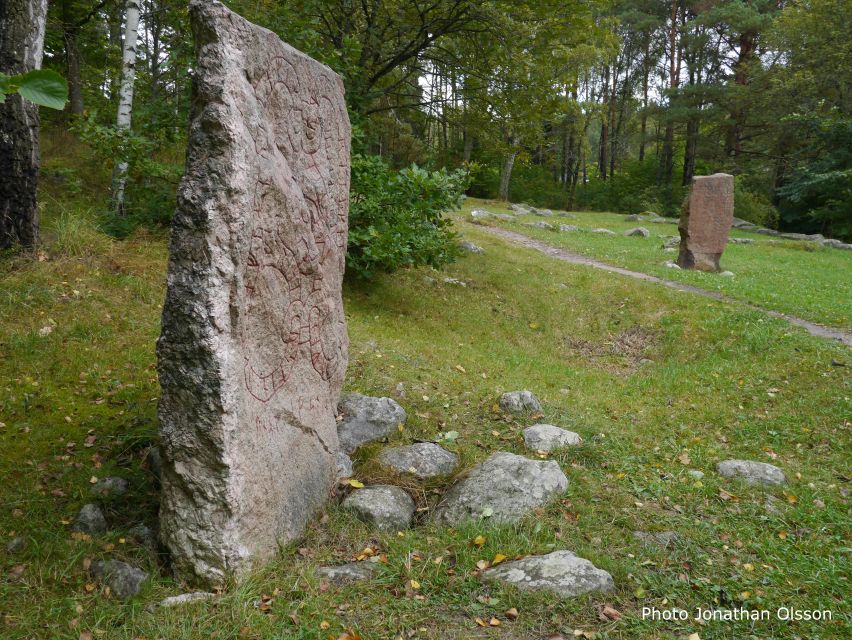
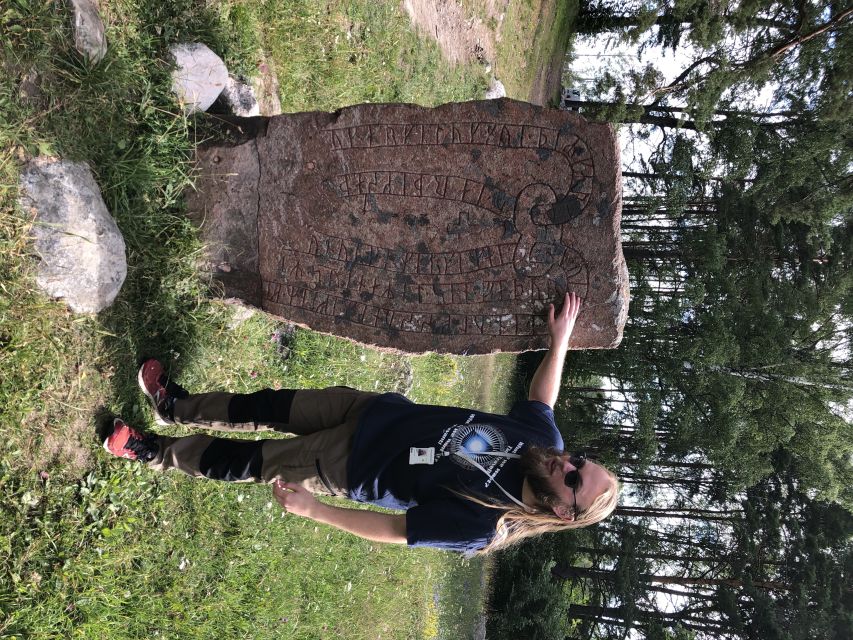
At Broby bro and the Jarlabanke sites, you see several stones that are about 1,000 years old. The carvings give the tour its strongest connection with individual people. Instead of thinking only about an anonymous Viking population, you begin to see names, relatives, builders, landowners, and leaders.
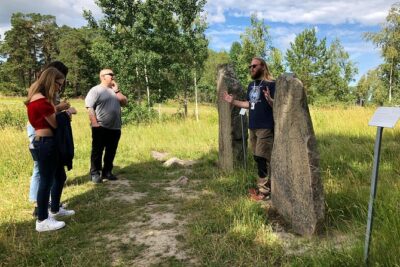
Your guide explains the stories behind the stones and the role of runic writing. You do not need prior knowledge of Old Norse or archaeology. The value comes from learning what the inscriptions can and cannot tell us. A stone may reveal who commissioned it and whom it honored, but it does not provide a complete biography. Good guiding helps separate evidence from guesswork.
This is also where the tour is strongest for visitors who want facts rather than fictional Viking imagery. The emphasis is on the stones, their setting, and the social world that produced them. You will not get a staged battle or a costume performance. You get weathered carvings, old burial grounds, and an explanation of why people went to the trouble of raising heavy stones beside roads and bridges.
Take time to look closely at the carvings, but do not expect every rune to be easy to see. Age, weather, lighting, and snow can affect what is visible. The guide’s explanation is important because the inscriptions are not always self-explanatory.
Jarlabanke Bridge and the ancient causeway
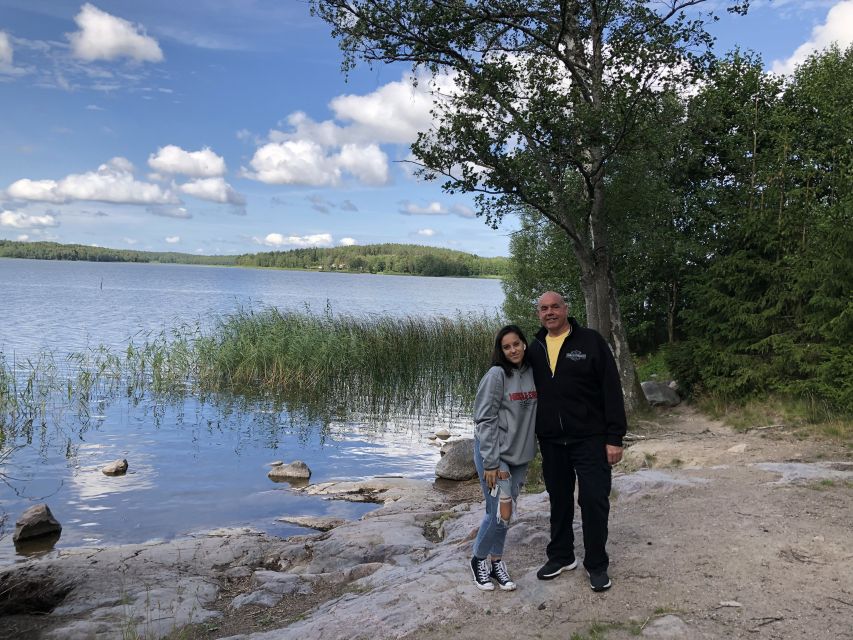
The next stop is the Jarlabanke Bridge, located at the entrance to a causeway. The name suggests a simple crossing, but the site tells a larger story about authority and public works.
The raised runestones near the bridge are part of what makes this stop special. They connect the road with Jarlabanke, a Viking chief, and his family. Your guide explains how roads and bridges were built and why a local leader might mark such work with stones.
This is a practical side of Viking life that often gets overlooked. Raiding and exploration make dramatic stories, but communities also needed reliable routes for moving people, animals, goods, and messages. A causeway across wet ground or near a lake could make a real difference to local travel.
The bridge also shows how construction could become a public statement. Building or improving a crossing required labor, organization, and access to materials. Raising stones beside it helped attach the work to Jarlabanke’s name and clan. The message was not only we built this, but also this family has influence here.
I find this stop especially useful because it joins archaeology with social ambition. The Vikings were not only reacting to the environment. They were reshaping it and making sure people remembered who had done the work.
Do not expect a complete bridge that you can walk across today. The attraction is the surviving setting, the runestones, and the story of the road and causeway. The stop works best when you pay attention to how the pieces fit together rather than looking for one dramatic ruin.
More Viking history days from Stockholm:
- Entrance ticket to The Viking Museum
★ 4.0 · 301 reviews - Viking History, Runes & Countryside 9h Tour to Sigtuna & Uppsala
★ 4.5 · 283 reviews - Viking History and Swedish Countryside Tour to Sigtuna & Uppsala
★ 4.5 · 162 reviews - From Stockholm: Uppsala and Sigtuna Viking Sites Tour
★ 4.7 · 157 reviews
Arkils tingstad and Viking decision-making
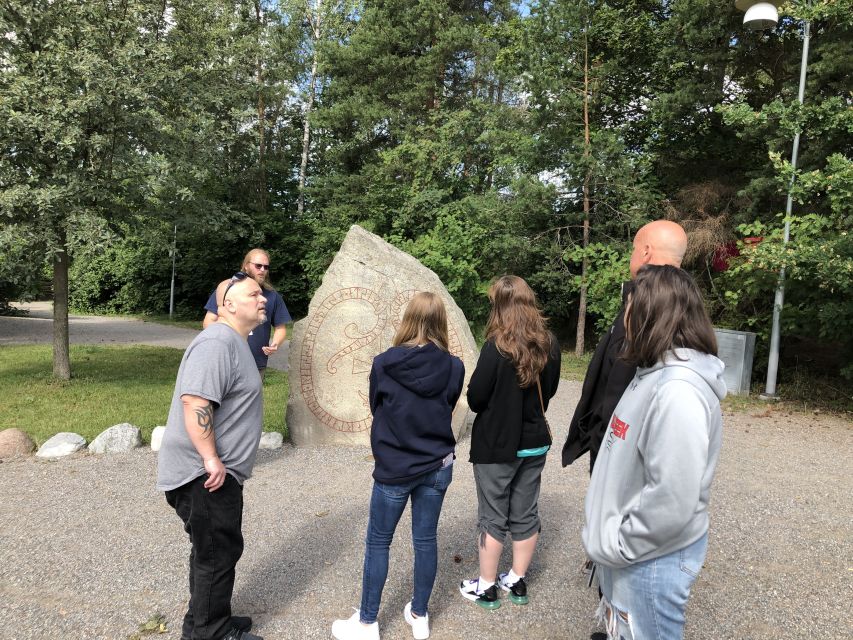
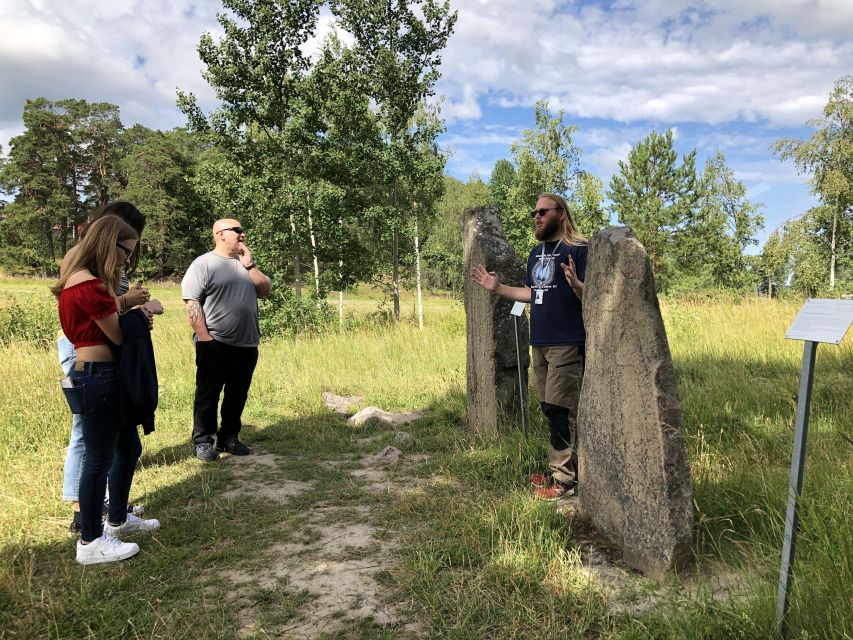
The final major site is Arkils tingstad, the remains of a Viking Age parliament or assembly place. This is where the tour moves from graves and roads to law and community organization.
The word ting refers to an assembly where people gathered to settle disputes, make decisions, and deal with matters affecting the wider community. Viking society was not governed by a modern parliament, but it was not simply ruled by isolated chiefs either. Local assemblies gave powerful families, landowners, and other members of the community a place to negotiate and argue.
Arkils tingstad helps you picture this process in a real location. The remaining stones do not give you a perfect reconstruction of a meeting, but they provide a physical point for understanding how people organized public life. Your guide explains who held power, how society worked, and how law depended on personal ties and local influence.
This is an important balance to the usual Viking story. A society that could build roads, maintain bridges, honor the dead, and gather for legal decisions required planning and cooperation. Conflict was part of life, but so were rules, alliances, and public agreements.
The site is also a good place to ask questions. If you are curious about how ordinary people fit into Viking society, ask the guide. The advertised focus is on organization and social structure, and the small group gives you a better chance to explore those subjects than a large coach tour would.
What the three-hour format really gives you
Three hours is enough for a clear introduction to Stockholm’s Viking surroundings. You see several connected locations rather than spending the whole outing at one reconstructed attraction. The route covers burial customs, family power, transport, public construction, runic writing, and local government.
The compact schedule is also easy to fit into a Stockholm itinerary. You can spend the morning or afternoon on the tour and still have time for central Stockholm’s museums, old town, restaurants, or waterfront. Hotel pickup and drop-off add practical value, especially if you are staying near the central station.
The limitation is depth. You will not have hours to wander every site, study every stone, or visit a museum collection. The tour gives you a strong framework, then leaves you with subjects to explore on your own.
That trade-off works well for first-time visitors and people with limited time. If you have already visited several Swedish Viking sites or want detailed archaeological study, you may find the schedule too brief. For most visitors, though, three focused hours are more useful than a long day padded with distant stops.
Group size, transport, and daily comfort
A group of no more than 16 people is a sensible middle ground. You get the efficiency of shared transport without the scale of a full coach. Pickup is available from hotels and accommodation within 5 kilometers of Stockholm Central Station, but you should confirm that your address falls inside the service area before booking.
The vehicle takes you between the countryside sites, which matters because the stops are spread across the Runic Kingdom area. You are not expected to arrange separate local transport. The driver and guide are included, as are the costs associated with the activity.
Food is not included. Plan to eat before pickup, particularly if you are booking the tour at a time when restaurants or cafés may be less convenient. Gratuities are also not included, so leave room in your budget if you feel the guide provided a good service.
Weather is the one comfort issue you should take seriously. The experience includes outdoor burial grounds, stones, roads, and countryside. Summer clothing should be practical rather than formal, and winter clothing needs to be genuinely warm. Shoes with good grip will make walking around uneven historic sites easier.
Is $138 a fair price?
At $138 per person, this is not the cheapest way to learn about Viking Sweden. The price makes more sense when you count the hotel pickup, return transport, English-speaking guide, small group, and several rural sites in one outing.
You are paying for access and interpretation as much as transportation. Without a guide, you might see a runestone and understand only that it is old. With the right explanation, you can connect it to burial customs, family networks, Christian conversion, road building, and local politics.
The value is strongest if you want convenience. Hiring a car, planning the route, finding the sites, and understanding the stones would take time and research. The tour handles that work in three hours.
The price is harder to justify if you are looking only for a quick photo stop or a large reconstructed Viking village. This is a history-focused excursion, not a theme park. You are paying for a compact lesson at authentic places.
The overall rating is 4.7 from 29 reviews, and the praise centers on the guide’s explanations, the runestones, and the connection between the sites and Viking life. Erik, in particular, is noted for explaining Norse history clearly and for offering Swedish food suggestions. Those personal touches can make the transport time feel like part of the tour rather than dead time.
Who will enjoy this tour most?
I would choose this outing if you want to understand how Viking society worked, not just collect dramatic photographs. It suits adults, older children, history fans, and anyone who likes walking through real places while listening to a guide explain what happened there.
It is also a good option for visitors who have already seen Stockholm’s indoor attractions and want a change of pace. The countryside, old roads, burial ground, and runestones give you a different view of the region.
You may want a longer or more specialized experience if you are an archaeology student, a serious runic scholar, or someone who wants to spend a full day at Viking sites. The tour is introductory, though it can still be intellectually satisfying because the sites are genuine and the themes connect well.
Families should consider the weather and the outdoor nature of the stops. Children who enjoy old stones, stories, and exploring will have more fun than children expecting costumes, weapons, or hands-on activities. The tour is not presented as an interactive museum program.
Should you book it?
Book this tour if you want an efficient, well-organized introduction to Viking Sweden outside Stockholm. The best reasons are the authentic sites, the runestones connected with real people, the story of Estrid, and the chance to learn how roads, bridges, graves, and assemblies fit into one society.
Skip it if you need a full-day archaeological program, a meal included, or a theatrical Viking experience. Also think carefully about the season. In winter, the scenery can be beautiful, but the cold may be severe.
For most visitors, the $138 cost is reasonable because it combines rural transport, a small group, hotel pickup, and an English-speaking guide in a short block of time. If you want the Vikings explained through the places where they lived, remembered their dead, built roads, and made decisions, this is a worthwhile choice.
FAQ
How long does the Viking Culture and Heritage tour last?
The tour lasts three hours, including the countryside visits and transport from Stockholm.
Where does hotel pickup take place?
Pickup and drop-off are available from hotels and accommodation located within 5 kilometers of Stockholm Central Station.
Is the tour conducted in English?
Yes. The tour has a live English-speaking guide.
How large is the group?
The group has no more than 16 people.
What sites does the tour visit?
The itinerary includes Broby bro and the Jarlabanke Runestones, the Jarlabanke Bridge and causeway, and Arkils tingstad, a Viking Age assembly site.
Is food included?
No. Food is not included, so you should eat before the tour or bring what you need.
Are gratuities included?
No. Gratuities are not included in the price.
Can I cancel the booking?
You can cancel up to 24 hours in advance for a full refund. The activity also offers reserve now and pay later booking.
More History Walks in Stockholm
- Viking History Small Group Tour from Stockholm: Half Day Including Sigtuna
★ 4.5 · 111 reviews - Stockholm Old Town Gamla Stan, Historic Walking Tour, Small group
★ 5.0 · 54 reviews - Private Full Day Viking History Tour from Stockholm Including Sigtuna and Uppsala
★ 5.0 · 51 reviews - 3-4h Viking History Short Day Tour from Stockholm
★ 5.0 · 41 reviews
Just added around Stockholm
- World War II Stockholm Old Town Walking Tour and Army Museum★ 4.6 · 4 reviews
- Stockholm: Archipelago Guided Boat & Walking Tour of Vaxholm★ 3.1 · 23 reviews
- Vaxholm & Stockholm Archipelago: Guided Excursion, Day Trip★ 4.8 · 41 reviews
- Stockholm: Underground Metro Art Ride with a Local Guide★ 4.6 · 39 reviews
- Minivan Arrival Transfer Stockholm Airport ARN to Stockholm City★ 4.5 · 8 reviews
- Airport Transfer: Airport ARN to Stockholm by Business Car★ 4.0 · 3 reviews
- Arlanda Express Train Airport and Stockholm City Transfer★ 5.0 · 3 reviews
- Traditional Persian Cooking Class in Stockholm with a Local★ 5.0 · 20 reviews
Viking History Tours, compared.
Viking History, Runes & Countryside 9h Tour to Sigtuna & Uppsala
Read our review →
Stockholm Viking History Full Day Tour to Sigtuna + Uppsala
Read our review →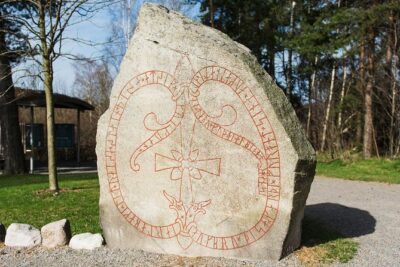
Viking History and Swedish Countryside Tour to Sigtuna & Uppsala
Read our review →
Viking History Small Group Tour from Stockholm: Half Day Including Sigtuna
Read our review →
Full Day Viking Tour with Fika Swedish Coffee Break
Read our review →Browse the lists this tour appears in