

Reviewed · CITY TOURS
Walking Tour of Stockholm’s City Center
Stockholm’s modern center comes into focus on this two-hour walk, which links the railway station, City Hall, Parliament, royal buildings, parks, theaters, and shopping streets. It is less about entering grand interiors and more about understanding how central Stockholm fits together.
I like the low price and the useful starting point near Central Station. I also like the guide-led context: Stefan, Amon, Karl, and Sophia have each been praised for clear explanations, good answers, and engaging stories. The main drawback is the route itself. The walk can feel slow at the beginning, and city noise or a weak microphone may make parts hard to hear.
Key points to know before booking
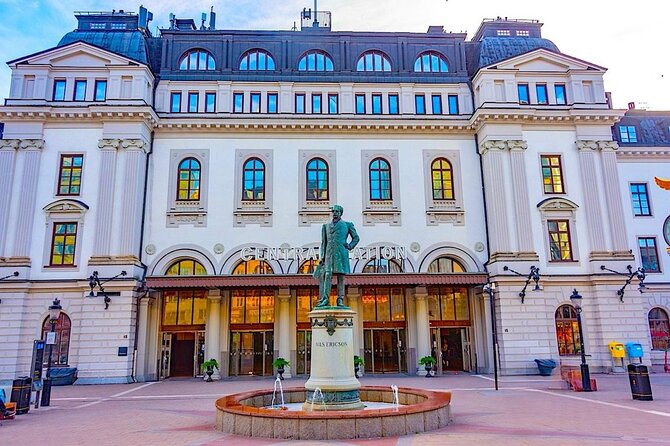
- A two-hour introduction to central Stockholm: The route covers major civic, royal, cultural, and commercial sights.
- A public group of up to 27 people: This is not a private tour, though some departures may feel small and relaxed.
- No indoor sightseeing: You see the buildings from outside, so plan separate visits if you want to enter City Hall, Parliament, the Opera, or the Royal Dramatic Theatre.
- A very low advertised price: At $3.55 per person, the tour offers excellent value if the guide is strong, though tips are not included.
- Guides make the biggest difference: Past departures have featured Stefan, Amon, Karl, Sophia, and others, with mixed feedback on speaking volume and presentation style.
- A practical first-day activity: The route helps you get oriented and gives you ideas for what to explore afterward.
What this Stockholm walk is really designed to do
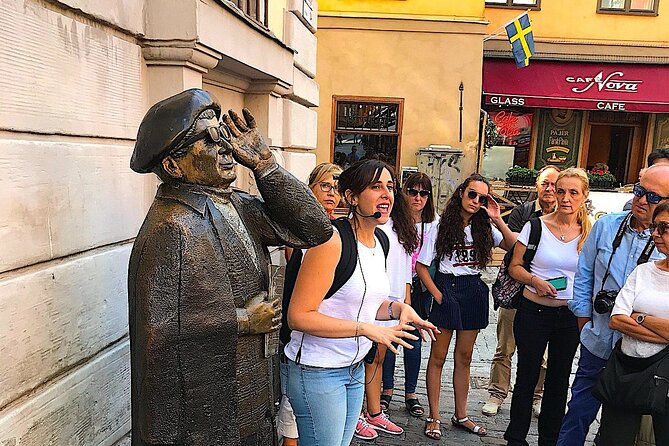
This is an orientation walk, not a museum tour. You move through central Stockholm while your guide explains buildings, Swedish politics, royal traditions, public spaces, culture, and everyday life.
The route begins at Centralplan 15, outside Stockholm Central Station, at 11:00 a.m. That location is easy to reach by public transportation and makes sense for a first look at the city. You start amid rail connections and city traffic, then work toward the waterfront, civic buildings, shopping streets, royal sites, and theater district.
The tour is advertised at about two hours, with a maximum group size of 27. That is large enough to include a mix of people, but still limited compared with a big coach outing. I would arrive a little early and position myself close to the guide. Several comments praise guides who welcomed questions, while others note that traffic noise and microphone problems sometimes made hearing difficult.
At this price, I would think of the tour as a low-cost introduction rather than a fully polished premium product. The guide is central to the experience. A strong guide can turn a simple walk past a building into a useful lesson about Sweden. A weaker guide can make the same route feel like a list of facts.
More City Tours in Stockholm
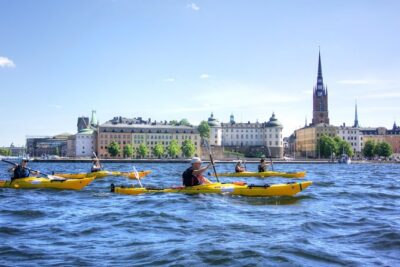
- Stockholm: City Archipelago Sightseeing Cruise with Guide
★ 4.3 · 10,798 reviews - Stockholm: City Sightseeing Hop-On Hop-Off Bus Tour
★ 3.9 · 682 reviews - Stockholm: Guided City Sightseeing Open Electric Boat Tour
★ 4.8 · 516 reviews
From Nils Ericson to Stockholm City Hall
The first stop is the statue of Nils Ericson outside Central Station. Ericson was a Swedish engineer linked to the modernization of the country’s railways and canals. The bronze statue, created by John Börjeson in 1893, gives your guide an early chance to explain Sweden’s interest in transport, engineering, and practical public works.
The stop lasts about five minutes, so do not expect a long lecture. Its main value is location. You begin with the railway station behind you and a figure associated with the systems that helped connect Sweden.
From there, the route goes to Stockholm City Hall, one of the city’s most recognizable buildings. Its red-brick exterior and Three Crowns spire are easy to identify, and the building is known for hosting the Nobel Prize banquet and official events.
You will have about ten minutes here. The guide can explain the building’s role and point out details from outside, but this experience does not include an indoor visit. That matters because City Hall’s famous Blue Hall and Golden Hall are inside, and the tower is associated with panoramic views. You should not book this walk expecting access to those spaces.
The first section is one of the route’s potential weak spots. One person found the trip from Central Station through City Hall too long and dull, with roughly 45 minutes passing before the next main stop. That will depend on the exact route and guide, but it is worth knowing if you prefer a compact walk with constant sightseeing.
Drottninggatan and the city’s everyday side
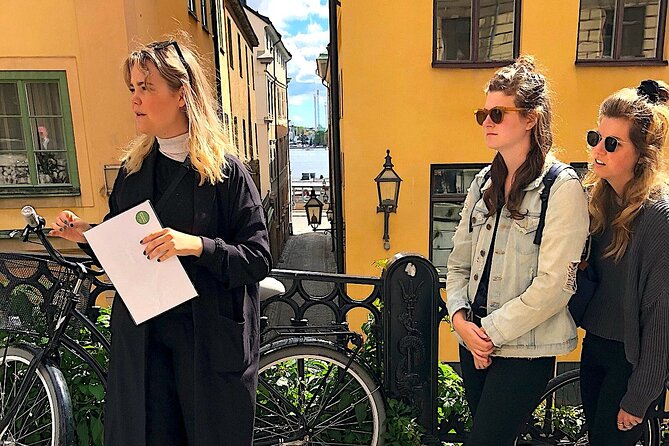
Drottninggatan changes the tone. This pedestrian shopping street runs from the Gamla Stan area toward Observatorielunden and is lined with shops, cafés, restaurants, older buildings, and newer commercial spaces.
The planned stop is about ten minutes. You will not spend enough time here for serious shopping, but you get a look at the part of Stockholm used for ordinary errands and city life. This is useful because the walk is not limited to royal façades and formal monuments.
I like this kind of stop on a first visit. Grand buildings explain national identity, but a shopping street shows how the center works on a normal day. If you want to browse, eat, or return to a café, note the location and come back after the tour. The group will keep moving.
Parliament and Gustav II Adolf’s square
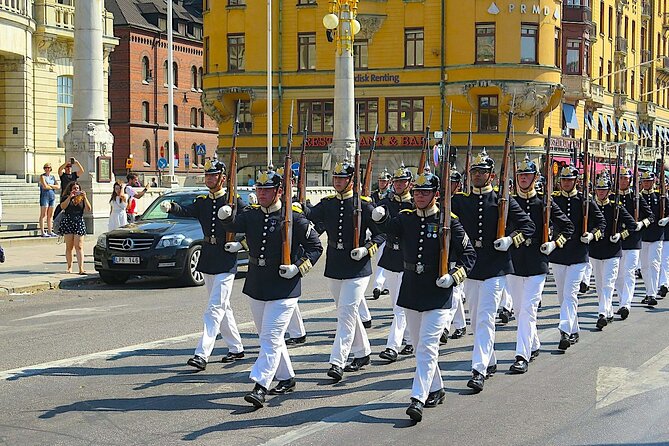
The Parliament Building, or Riksdagshuset, sits on Helgeandsholmen in central Stockholm. The neo-Gothic exterior dates from the period between 1897 and 1905 and was designed by Aron Johansson. Your guide allows about 15 minutes here, which is one of the longer stops.
This is a good place to connect architecture with Swedish government. The building is more than a photo stop, since it is the working home of the Swedish Parliament. Still, the tour only provides an outside view. Admission is not included, and the general description makes clear that the walk does not include indoor visits.
Next comes the statue of Gustav II Adolf in Gustav Adolfs Torg. The king, known as the Lion of the North, played a major role in the Thirty Years’ War and in the development of modern military methods. The statue was unveiled in 1796 and shows him in a commanding pose.
You get about five minutes here. That is enough for a short explanation and a photograph, not a full treatment of seventeenth-century European politics. If you enjoy military history, this may be one of the more interesting brief stops. If not, it still helps explain why Swedish kings appear so often in the city’s squares and public memory.
More Walking Tours in Stockholm
- Stockholm: Ghost Walk and Historical Tour
★ 4.7 · 2,206 reviews - Walking Tour of Stockholm Old Town
★ 5.0 · 1,175 reviews - The Original Stockholm Ghost Walk and Historical Tour – Gamla Stan
★ 4.5 · 1,165 reviews - Stockholm: Old Town Walking Tour with Local Guide
★ 4.7 · 719 reviews
The Royal Opera and Saint James’s Church
The Royal Swedish Opera is the country’s leading opera stage. The institution dates to 1773, while the current building opened in 1898. Its exterior reflects neo-classical design with French Baroque influences.
The stop lasts about ten minutes, but you will view the building from outside. Admission is not included. That is a fair arrangement for a city walk, though you should plan another visit if an opera performance or interior tour interests you.
Sankt Jacobs kyrka, or Saint James’s Church, follows. The red-fronted Lutheran church near Kungsträdgården combines Gothic and Renaissance elements and dates back to the 1600s. It is associated with Saint James, the patron saint of pilgrims, and is known for its organ and interior.
The itinerary allows ten minutes here, with admission listed as free. Because indoor access is not promised, treat this as an exterior stop unless your guide says otherwise. The church adds variety to the route. After government buildings, royal references, and performance venues, you get a place of worship with a different visual style and purpose.
Berzelii Park and the royal stables
Berzelii Park provides a break from streets and façades. Established in 1853, it is named for chemist Jöns Jacob Berzelius and includes greenery, statues, and a monument to him unveiled in 1858.
The planned 15 minutes here is generous compared with several monument stops. You can expect the guide to discuss the park’s place in central Stockholm and its connection to the surrounding Norrmalm district. The park sits near the Royal Dramatic Theatre, so it also helps set up the final part of the walk.
The Royal Stables, or H.M. Konungens Hovstall, introduce Sweden’s royal ceremonial traditions. The site is associated with royal horses, carriages, harnesses, and state occasions. Guided visits to the stables and carriage museum are possible as a separate activity, but this walking tour does not include that indoor experience.
The stop lasts ten minutes. For most people, the value is the outside explanation of how horse-drawn transport still fits into royal ceremonies and national events. If you have a particular interest in royal life, note the location for a later visit.
Kungsträdgården and Karl XII
Kungsträdgården is one of central Stockholm’s best-known public spaces and provides a natural pause in the route. The itinerary gives ten minutes to this area, followed by another ten minutes for Karl XII’s statue and square.
The supplied description refers to Kungsträdgården Opera, but the main value of this part of the route is the public setting around the park and its cultural buildings. Your guide may use the area to explain Stockholm’s opera tradition and the place of public performance in Swedish city life. The Opera itself was founded in 1773, and its current building is the one seen earlier in the walk.
Karl XII’s statue was erected in 1868, while the square was established in 1854. The king is remembered for his military role, and the statue gives the guide another chance to discuss Sweden’s former position as a European military power.
I would not expect a long stop at either location. The schedule divides time into short sections, so the guide needs to keep the group together and maintain a steady pace. That works well for orientation, but less well if you want time for photographs or detailed architectural study.
The Royal Dramatic Theatre finish
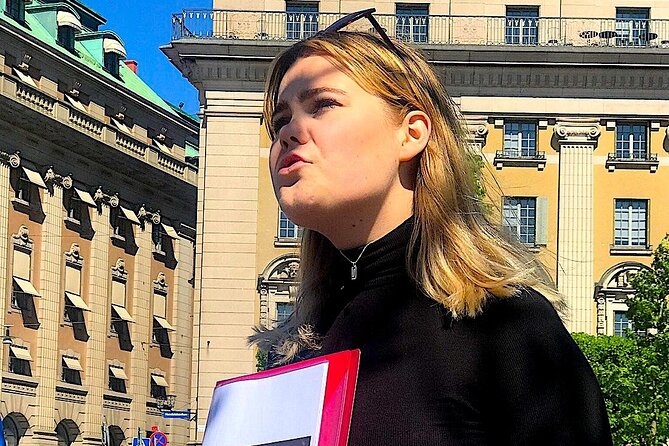
The final stop is the Royal Dramatic Theatre, or Dramaten, at Nybroplan. Sweden’s leading spoken-drama stage was established in 1788, and the current Art Nouveau building dates from 1908. The theatre is linked with major Swedish actors, including Greta Garbo, and with both Swedish and international drama.
The walk usually ends near the theatre. This is a useful finish because Nybroplan is central and close to other sights, restaurants, public transportation, and the waterfront area. You can continue exploring instead of being left at an out-of-the-way drop-off point.
Admission is not included. As with City Hall, the Opera, and Parliament, you should see this as an exterior introduction. If you want performances or interior access, arrange those separately.
Guide quality, sound, and group size
The strongest part of this experience is the guide’s ability to connect the stops. Amon has been described as entertaining and good at adding fun facts. Stefan has been praised for giving a clear introduction to city layout, history, and current life while leaving room for questions. Karl has been described as prompt and well prepared, while Sophia has been praised for being friendly and informative.
The feedback is not uniformly positive. One person found the presentation dry and disappointing. Another had trouble hearing because of street noise and a microphone problem. An iPad was used on one departure to show images, but bright sunlight made the screen difficult to see.
These details matter. This is an outdoor tour through a working city, not a quiet lecture room. Cars, pedestrians, construction, and other street sounds can interfere with explanations. If you have hearing concerns, stay near the guide and ask politely for repetition when needed.
The group can include up to 27 people, though some departures have felt smaller and more comfortable. Since this is a public walk, you will share the guide with other participants. The guide may also ask the group to stay focused, especially while crossing streets or explaining a point in a noisy area.
Is $3.55 good value?
At $3.55 per person, the price is unusually low for a guided city walk in Stockholm. Even if you only use it to learn the layout of central Stockholm, the cost is modest. You also receive an English-speaking guide and a mobile ticket, with no separate admission fees built into the tour.
The catch is that tips are not included. The low price appears to work in the style of a tip-supported walking tour, so bring some extra money if the guide gives you a useful morning. You are paying for the guide’s time and interpretation, not for entry to monuments or museums.
I would judge the value this way:
- Book it for orientation, city context, and a quick look at major buildings.
- Do not book it as an indoor architecture tour.
- Treat the price as a starting point, not the total amount you may choose to spend.
- Allow time afterward for any buildings you want to enter.
Who should book this walk?
I would recommend it most strongly for a first visit to Stockholm, especially if you are staying near the center or arriving by train. The route gives you a working map of the area and points out places you can revisit later.
It also suits people who like history and city design but do not want a long museum talk. The route covers railways, government, monarchy, opera, religion, parks, shopping, and theater in a compact format.
You may want to skip it if you have limited mobility, dislike walking on city streets, or need guaranteed access to seats and quiet listening conditions. One comment says the tour was tiring despite not involving a great deal of walking, so the two-hour duration should not be mistaken for an effortless outing.
The walk is described as suitable for most people, and service animals are allowed. It is near public transportation, but the tour remains outdoors, so comfortable shoes and weather-appropriate clothing are sensible choices.
Final verdict: a useful first look at Stockholm
I would book this tour as an inexpensive first-day introduction, not as the main cultural event of a Stockholm visit. Its best moments come when the guide adds stories, answers questions, and explains how the city’s royal, political, and cultural institutions connect.
The route has some uneven sections, and the opening stretch may feel too long for people who want nonstop sights. Still, the price is hard to argue with, the final location is convenient, and strong guides such as Stefan, Amon, Karl, and Sophia can make the city feel much easier to understand.
Book it if you want a practical orientation and plan to explore interiors on your own. Skip it if you need a tightly edited route, guaranteed audio clarity, or admission to Stockholm’s famous buildings.
FAQ
Where does the Stockholm walking tour begin?
It begins at Centralplan 15, 111 20 Stockholm, outside Stockholm Central Station.
What time does the tour start?
The scheduled start time is 11:00 a.m.
Where does the tour end?
It usually ends near the Royal Dramatic Theatre, Dramaten, at Nybroplan, 111 47 Stockholm.
Is this a private tour?
No. It is a public walking tour with other participants, and the group can include up to 27 people.
Are indoor admissions included?
No. The experience focuses on outdoor sightseeing and does not include indoor visits. Admission is specifically not included for Parliament, the Royal Swedish Opera, and the Royal Dramatic Theatre.
Can I cancel for a full refund?
Yes, if you cancel at least 24 hours before the scheduled start time. Cancellations or changes made within 24 hours are not refunded, and the tour may also be canceled if its minimum number of participants is not reached.
Just added around Stockholm
- World War II Stockholm Old Town Walking Tour and Army Museum★ 4.6 · 4 reviews
- Stockholm: Archipelago Guided Boat & Walking Tour of Vaxholm★ 3.1 · 23 reviews
- Vaxholm & Stockholm Archipelago: Guided Excursion, Day Trip★ 4.8 · 41 reviews
- Stockholm: Underground Metro Art Ride with a Local Guide★ 4.6 · 39 reviews
- Minivan Arrival Transfer Stockholm Airport ARN to Stockholm City★ 4.5 · 8 reviews
- Airport Transfer: Airport ARN to Stockholm by Business Car★ 4.0 · 3 reviews
- Arlanda Express Train Airport and Stockholm City Transfer★ 5.0 · 3 reviews
- Traditional Persian Cooking Class in Stockholm with a Local★ 5.0 · 20 reviews
City Tours, compared.

City Archipelago Sightseeing Cruise with Guide
Read our review →
Guided City Sightseeing Open Electric Boat Tour
Read our review →


Go City All-Inclusive Pass with 20+ Attractions
Read our review →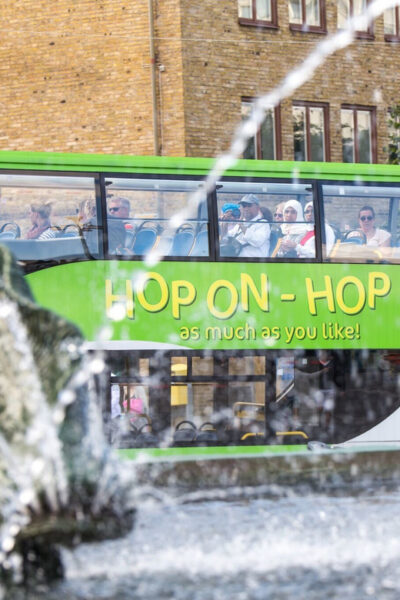
Browse the lists this tour appears in