
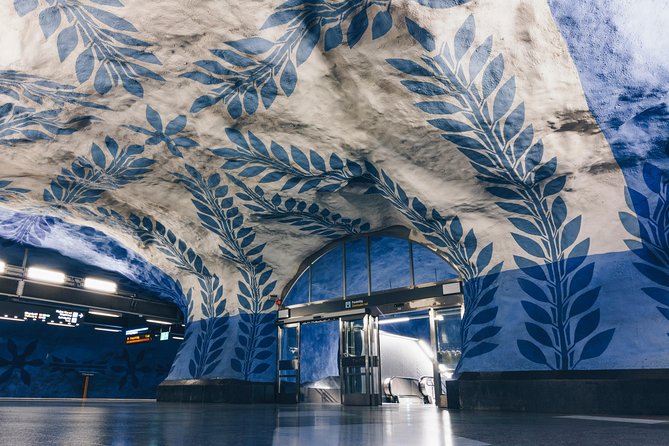
Reviewed · STOCKHOLM TOURS
Stockholm: Underground Metro Art Ride with a Local
Stockholm’s subway is more than a way to get around. It is a long, working art gallery, with painted rock, bold sculpture, and grand station designs tucked below the city. This 90-minute ride takes you from T-Centralen to Tekniska högskolan, using the metro itself as your route and museum.
I like the small group of up to eight, which gives you a better chance to ask questions and keep a comfortable pace. I also like that your subway ticket is included, and that guides such as Dan and Fayez have helped visitors spot details they might otherwise walk past. The main caution is the $131.12 price, which is high for an hour and a half, especially if your guide is less prepared than expected.
Key points at a glance
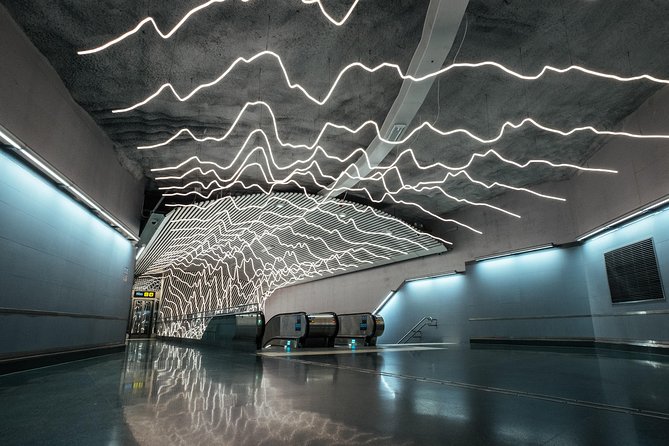
- T-Centralen begins the tour: Start in Stockholm’s central metro station, then travel through several stations with distinct art projects.
- Siri Derkert gets special attention: See work by one of Sweden’s most important modern artists underground.
- Ulrik Samuelson’s underground garden: Look for a station design that turns bare rock and concrete into a garden-like setting.
- The art changes from stop to stop: You may encounter Olympic references, the four elements, painted cave walls, sculpture, and graphic design.
- Small groups keep the tour personal: The maximum group size is eight, and the route can adjust to walking pace and interests.
- Expect stairs: The tour is not recommended for people with impaired mobility, and several steps can make it tiring for sore knees.
Stockholm’s metro is the museum
The best part of this experience is the setting. You are not being led through a quiet gallery with polished floors and labels beside every work. You are riding Stockholm’s ordinary subway, sharing platforms with people going to work, then stopping to look at art built into the stations.
That makes the tour useful in two ways. You get an introduction to public art, and you learn how to use Stockholm’s metro for the rest of your stay. One guide, Fayez, was especially effective at explaining the system and helping visitors feel confident enough to ride it on their own afterward.
The metro is described as clean and easy to use, but a first visit can still feel confusing. A local guide can point out where to look, explain how the stations connect, and keep the route moving. You are not spending 90 minutes staring at one wall. You are seeing several stations in a planned order.
That speed is also the tour’s main limitation. You will see a selection, not every notable station in Stockholm. Plan extra time afterward if you want to explore more on your own.
A few more Stockholm half-days to weigh up
- Stockholm: City Archipelago Sightseeing Cruise with Guide
★ 4.3 · 10,798 reviews - Stockholm: Skansen Open-Air Museum Admission Ticket
★ 4.5 · 3,427 reviews - Stockholm: Archipelago Boat Tour
★ 4.4 · 3,110 reviews
Starting at T-Centralen
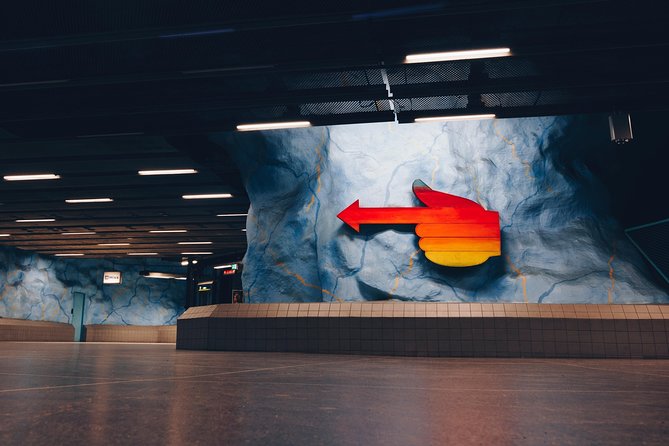
The meeting point is T-Centralen, at Stockholm’s central station. This is a practical place to begin because the tour can move directly into the metro system without wasting time on a long walk between attractions.
T-Centralen is also a good introduction to the idea behind Stockholm’s subway art. The station is known for its strong underground design, including exposed rock and large-scale painted surfaces. The setting feels more like a cave than a standard city station, and it helps you see how Stockholm’s planners and artists used the space rather than simply decorating it afterward.
At this first stop, pay attention to scale. Subway art has to work while trains arrive, commuters pass, and announcements echo through the station. A guide can help you notice patterns, colors, and figures that disappear into the background when you are rushing to catch a train.
This is one place where the tour’s value depends heavily on the person leading it. Dan is named in the feedback as a guide who could explain the details and meaning of each station. Another guide, Fayez, focused on the history of the metro and practical use of the system. You are not guaranteed either guide, but those examples show what a strong tour can offer.
Per Olof Ultvedt, Signe Persson-Melin, and Anders Österlin
One section of the route introduces work by Per Olof Ultvedt, Signe Persson-Melin, and Anders Österlin. The appeal here is the variety. You are not seeing one artist repeat one idea across several platforms. Instead, the tour brings together different approaches to public art.
That matters because Stockholm’s metro art is not just a collection of pretty backdrops. Artists worked with different materials, shapes, colors, and moods. Some pieces ask you to look at the walls. Others change how the whole station feels.
The itinerary does not specify every work or station connected with these artists, so you should think of this as an introduction rather than a full art lecture. If you have a particular interest in one of the three, ask your guide early. The small group format makes that easier than it would be on a large coach tour.
Photography is possible, but underground stations can be tricky. Lighting varies, people keep moving, and photographs may not capture the sense of scale. One point comes through clearly from the experience: pictures do not fully convey what you see in person. Leave some time to look before reaching for your phone.
Ulrik Samuelson’s underground garden
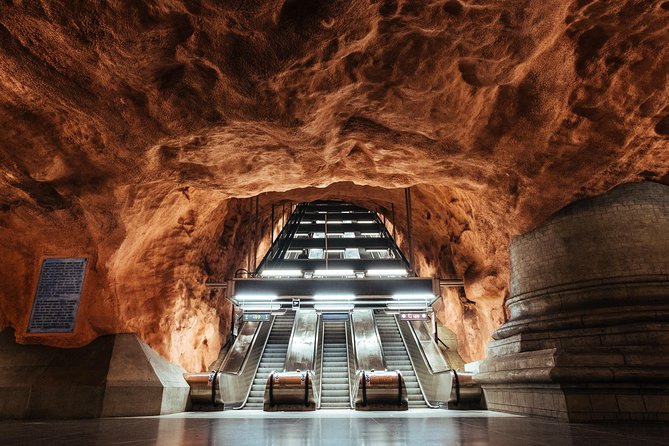
The stop connected with Ulrik Samuelson offers one of the tour’s more unusual visual changes. You are led to an underground garden, a design that uses the station’s hard setting to suggest something organic and open.
The contrast is the point. A metro station is built for movement, noise, and function. A garden suggests quiet, growth, and space. Samuelson’s work plays with that tension, making you look at the station as a designed environment rather than a passageway.
This is a good stop for anyone who enjoys architecture as much as painting. You may find yourself paying attention to the way the walls, ceiling, platform, and lighting work together. The art is not necessarily one object in one place. It can be the whole station around you.
The drawback is that the tour may not linger as long as you would like. With several stations packed into 90 minutes, each stop has to be fairly brisk. If a particular station catches your eye, note its name and return later using the same metro system you have just learned to handle.
Same city, a completely different kind of day:
- Stockholm: Highlights Boat Tour
★ 4.3 · 2,542 reviews - Stockholm Pass: Save up to 50% – Includes Vasa Museum Ticket
★ 4.1 · 2,392 reviews - Stockholm: Ghost Walk and Historical Tour
★ 4.7 · 2,206 reviews - Walking Tour of Stockholm Old Town
★ 5.0 · 1,175 reviews
Siri Derkert’s powerful metro art
Siri Derkert is one of Sweden’s best-known artists, and her work gives the tour a strong historical and artistic focus. The station art connected with her is not treated as a quick photo stop. It is a chance to think about how a major artist used a public place and a massive wall as part of her work.
Derkert’s art can feel more serious than the playful or colorful sections of the route. That change in mood is helpful. It shows that Stockholm’s underground program includes ideas and social themes, not just decoration.
Your guide’s explanation matters here. Without context, you may notice lines, figures, or text without understanding why they are there. A good guide can point out details and explain what you are seeing in plain language.
This is also one of the places where you should ask questions if you have them. One person on the tour found the guide unable to answer several questions about the art, which made the experience feel overpriced. That is a fair warning. The quality of the commentary can change the tour from a pleasant metro ride into a worthwhile art lesson.
The Olympic tribute underground
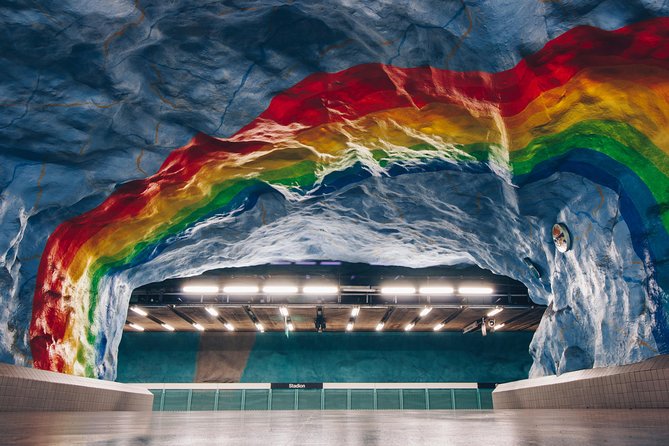
Another stop is devoted to an homage to the Olympic Games. It adds a lighter, more celebratory note to the route and shows how public art can mark an international event.
The Olympic theme also fits the metro well. Stations are places where people move in groups, gather, wait, and head toward a shared destination. A tribute to sport can use that sense of motion and energy.
The tour information does not identify the exact station or explain which Olympic elements you will see, so do not book this expecting a detailed Olympic history lecture. Think of it as one part of a larger visual tour, with your guide adding context as the group moves through the network.
If you enjoy design connected with major events, this stop may be a highlight. If your main interest is Swedish painting, it may feel less important than the Derkert section. The flexible approach is useful here, since the guide can respond to what catches your attention.
The four elements and changing station moods
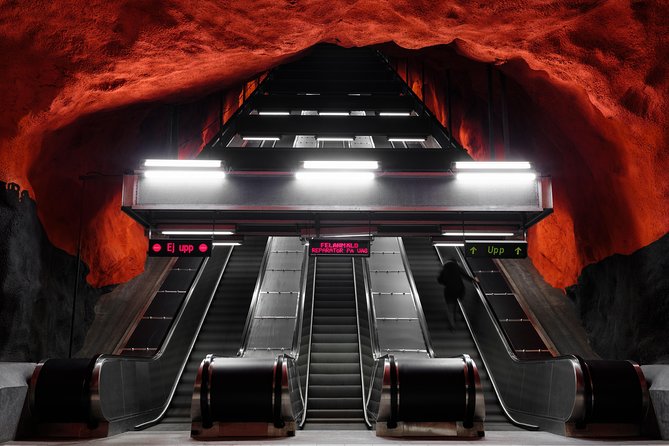
The final theme listed for the route is the four elements. This gives the tour another shift in mood and subject. Instead of focusing on one named artist, you are invited to notice how a station uses broad natural ideas to shape its appearance.
That contrast keeps the tour from becoming a list of artist names. You are also looking at atmosphere, color, material, and the way a station feels as you move through it.
The phrase four elements leaves room for interpretation, and the exact details are not specified. Ask your guide to explain how the idea appears in the station. If the answer is brief, you can still enjoy the visual change, but this is another moment when the guide’s preparation matters.
By this point, you should have a better sense of how varied Stockholm’s subway art can be. One station may feel like a cave, another like a garden, another like a memorial or public statement. The metro becomes a series of different rooms below the city.
What 90 minutes really gives you
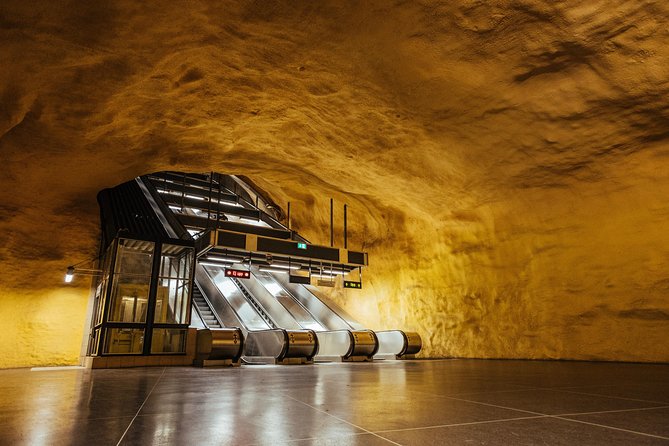
Ninety minutes is enough for a well-organized introduction. It is not enough for a complete tour of Stockholm’s underground art. Several people can be shown a surprising amount in that time, but the pace will be purposeful.
You will probably spend part of the tour moving through stations, waiting for trains, and walking between platforms. That is not wasted time, since the transport itself is part of the experience, but it means the actual explanation at each artwork may be short.
The small group helps. With no more than eight people, the guide can keep everyone together and adjust to the group’s walking pace. The itinerary may also change based on weather conditions or the interests of the people attending.
Although the art is underground, do not assume the tour is effortless. Several steps are involved, and one person specifically found the walking difficult because of knee problems. This is not a good choice if stairs and extended standing are a serious problem. Service animals are allowed, and most people can participate, but the experience is not recommended for people with impaired mobility.
Is $131.12 a fair price?
At $131.12 per person, this is an expensive short tour. The price includes a local guide, a small group, and the subway ticket, but it does not cover personal expenses. Transportation tickets for the tour are included, while other entry tickets are not relevant to the basic route unless the itinerary changes.
The small group is the strongest argument for the price. Eight people or fewer is a much better setting for questions than a large city tour. You are also paying for route planning. A local guide knows which stations to connect and how to show several different art styles without making you work out the metro system yourself.
Still, the value is not automatic. A strong guide can explain the meaning behind the art, point out small details, and give you confidence using the network later. A weak guide may simply move you from station to station, leaving you with a few photographs and unanswered questions.
The overall rating is 4.3 from 18 ratings, with several very positive scores and some clear complaints. That mixed pattern suggests you should book this for the access and structure, not because every guide will provide the same depth of explanation.
The experience is more worthwhile if you are new to Stockholm, interested in public art, or uneasy about using the metro. It is less attractive if you already know the system and are happy to explore stations independently.
How to get the most from the tour
Meet at T-Centralen and arrive ready to walk. The group may move at a steady pace, and delays caused by late arrivals can reduce time at the art stops.
Wear comfortable shoes. The route includes stations, platforms, corridors, and steps, so this is not a sit-down museum visit. If your knees are sensitive, think carefully before booking.
Ask questions early. If you want more information about Siri Derkert, Ulrik Samuelson, the Olympic tribute, or the four elements, tell the guide what interests you. The itinerary adapts to the group’s interests and walking pace, so your questions can help shape the experience.
Keep the rest of your day flexible. You may want to return to one or more stations after the tour, especially since the 90-minute route only shows a selection. The finish at Tekniska högskolan makes it easy to continue with your Stockholm plans, though the tour itself does not include museum or monument admission.
Free cancellation is available if you cancel at least 24 hours before the start time. Changes or cancellations inside that window are not accepted for a refund.
Who should book Stockholm’s underground art ride?
Book it if you want an efficient introduction to Stockholm’s subway art and prefer to have a local explain what you are seeing. It is particularly useful for first-time visitors, art fans, railway enthusiasts, and anyone who wants to learn the metro before using it alone.
The tour also suits you if you value a small group and do not want to study station maps in advance. Guides such as Dan and Fayez show how much better the experience can be when the person leading it knows both the artwork and the transport system.
Think twice if $131.12 feels steep for 90 minutes, if you want a slow art lecture, or if stairs and walking are difficult. You can explore the metro independently for far less, but you will need to plan your own route and research the artists.
My call is simple: book this for structure, access, and a local introduction, but keep your expectations realistic. You will see memorable art in places you might otherwise miss, yet the final value depends on the guide you get and how much time the group spends at each stop.
FAQ
Where does the Stockholm underground art tour begin?
The tour begins at T-Centralen, Stockholm, 111 20 Stockholm, Sweden.
Where does the tour end?
The tour ends at Tekniska högskolan, 114 28 Stockholm, Sweden.
How long does the tour last?
The tour lasts approximately 1 hour and 30 minutes.
Is the subway ticket included?
Yes. The experience includes the subway ticket used during the tour.
How many people can join the group?
The group has a maximum of eight travelers.
Is the tour suitable for someone with limited mobility?
The tour is not recommended for guests with impaired mobility. It includes several steps, which can be difficult if you have knee problems.
Just added around Stockholm
- World War II Stockholm Old Town Walking Tour and Army Museum★ 4.6 · 4 reviews
- Stockholm: Archipelago Guided Boat & Walking Tour of Vaxholm★ 3.1 · 23 reviews
- Vaxholm & Stockholm Archipelago: Guided Excursion, Day Trip★ 4.8 · 41 reviews
- Stockholm: Underground Metro Art Ride with a Local Guide★ 4.6 · 39 reviews
- Minivan Arrival Transfer Stockholm Airport ARN to Stockholm City★ 4.5 · 8 reviews
- Airport Transfer: Airport ARN to Stockholm by Business Car★ 4.0 · 3 reviews
- Arlanda Express Train Airport and Stockholm City Transfer★ 5.0 · 3 reviews
- Traditional Persian Cooking Class in Stockholm with a Local★ 5.0 · 20 reviews
Stockholm Tours, compared.

City Archipelago Sightseeing Cruise with Guide
Read our review →



The Original Stockholm Ghost Walk and Historical Tour – Gamla Stan
Read our review →
Browse the lists this tour appears in