
Reviewed · TOURS
Scandinavian Art, Architecture and Design Tour in Stockholm
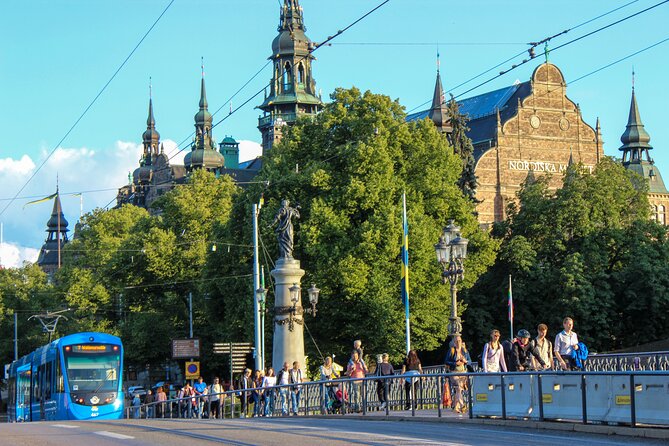
Stockholm’s design story is best understood on foot, and this tour links it to the city’s food halls, theaters, parks, and waterfront museums. You’ll move from the polished streets of Östermalm to the Nationalmuseum, seeing how Swedish taste grew from practical furniture and textiles into a world-famous design tradition.
I like the small maximum of 10 people, which should make it easier to hear the guide and ask questions. I also like the built-in time for browsing design shops, a useful touch if you want more than a parade of façades.
The main drawback is pace. Three hours covers several neighborhoods and major subjects, so this is an introduction rather than a close study of Stockholm’s museums or architecture. It is also a walking tour that requires good weather.
Key points to know
- Östermalm sets the tone: Walk Stureplan, Linnégatan, Nybrogatan, and Strandvägen among design stores, antique houses, and upholstery businesses.
- Ostermalms Saluhall adds taste to the tour: Spend about 30 minutes in one of Stockholm’s best-known food halls and see a 19th-century market building.
- Guide Olesia brings a personal touch: Her private tour received particular praise for lively stories and a good balance between explanation and independent browsing.
- Stockholm’s green spaces get proper attention: Kungstradgarden connects urban planning, royal history, architectural styles, and the story of Sweden’s falu red paint.
- The route finishes by the water: End at the Nationalmuseum, with discussion of Skeppsholmen, Moderna, ArkDes, art, and architecture.
- The price is reasonable for a small group: At $61.62 per person, the value depends on whether you want context and conversation rather than museum admission.
Why this three-hour walk works as a Stockholm introduction
This experience is built around a smart idea: Swedish design makes more sense when you see it in daily use. Instead of placing you in one museum for three hours, the route takes you through streets where furniture, textiles, antiques, public buildings, food, theater, and parks share the same city center.
You begin at Svampen, the mushroom-shaped meeting point at Stureplan in Östermalm. From there, the route moves through one of Stockholm’s most polished districts before heading toward the center and the Nationalmuseum. Travel time between parts of the route is included in the roughly three-hour duration, so you should expect a moving walk rather than three fixed hours at individual sights.
I see this as a useful first or second day activity. Early in a trip, it can help you understand what you are looking at during later walks. If you already know Stockholm well, it still makes sense if design, architecture, or Swedish cultural history is a main interest.
The tour is offered in English and has a maximum of 10 people. That is a meaningful advantage here. Design walks depend on noticing details, and a large crowd can make street-side explanations awkward. A small group also gives you a better chance to ask about a designer, building, or shop when something catches your eye.
A few more Stockholm half-days to weigh up
- Stockholm: City Archipelago Sightseeing Cruise with Guide
★ 4.3 · 10,798 reviews - Stockholm: Skansen Open-Air Museum Admission Ticket
★ 4.5 · 3,427 reviews - Stockholm: Archipelago Boat Tour
★ 4.4 · 3,110 reviews
Östermalm, where polished streets meet Swedish design
The first hour is devoted to Östermalm, taking in Stureplan, Linnégatan, Nybrogatan, and Strandvägen. These streets provide the best setting for the tour’s central subject: how Swedish design became associated with clean lines, useful materials, careful workmanship, and restrained decoration.
You will hear about Swedish design names, upholstery houses, antique dealers, and the historical setting behind them. The value here is not simply spotting expensive storefronts. A guide can explain why certain businesses matter and how a design district reflects the people who live nearby.
This section is also the most useful part for shoppers. The tour includes access to design shops, and you should get time to look at furniture, home accessories, and textiles at your own pace. That balance matters. A guide supplies the context, then you get a chance to decide what actually interests you.
One especially appealing feature is the attention to upholstery. The route includes a stop connected to a famous Swedish upholstery household name and to the tastes of Stockholm’s most affluent residents. This gives the subject a practical angle. You are not just hearing about abstract design ideals. You are seeing how custom furnishings and interior details fit into real homes and public spaces.
Keep your expectations sensible. This is not a shopping expedition with a discount or a workshop where you make something. It is an architectural and design walk with opportunities to browse. If you want to buy furniture, textiles, or accessories, you will have time to look, but the tour does not promise purchases or special prices.
Ostermalms Saluhall adds food and a 19th-century setting
After the streets of Östermalm, you spend about 30 minutes at Ostermalms Saluhall. The market is known as one of Stockholm’s major food halls, but it also matters architecturally. Its 19th-century structure gives you a chance to see how food, commerce, and city design came together in central Stockholm.
This stop keeps the tour from becoming too focused on furniture and façades. Swedish identity is expressed through food as well as interiors, and the market lets you encounter typically Swedish delicacies in a practical setting.
Half an hour is enough for an introduction, not a full meal crawl. You should have time to look around and absorb the atmosphere, but do not plan to sample everything or linger over lunch. If you want to eat here afterward, schedule extra time outside the tour.
The market is also a useful pause in a walking route. After an hour of streets and shops, an indoor food hall gives you a different view of Stockholm. It lets you connect design with everyday life, rather than treating Swedish style as something found only in showrooms.
The Royal Dramatic Theater and Stockholm’s stage tradition
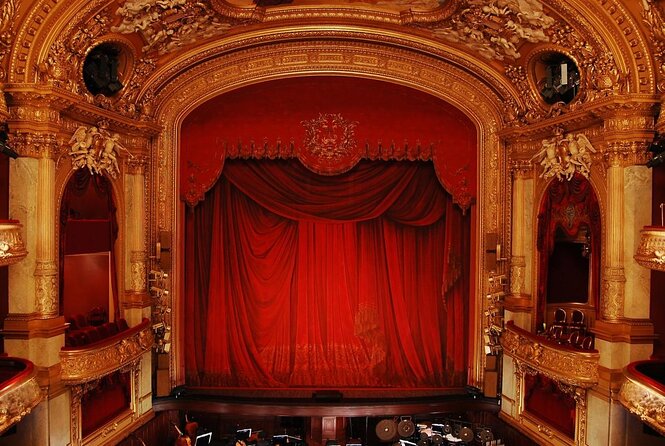
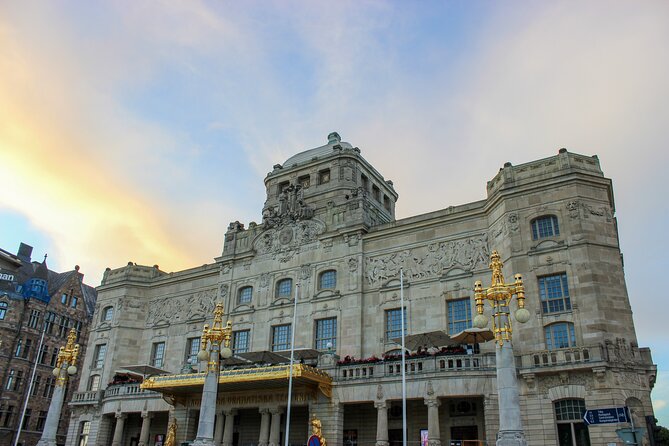
The next important stop is the Royal Dramatic Theater, or Kungliga Dramatiska Teatern. The building is presented as an Art Nouveau landmark, and the theater is tied to major figures in Swedish performance, including Greta Garbo and Ingrid Bergman.
You spend about 15 minutes here, so expect an exterior discussion and historical context rather than a theater visit. That short stop works well as part of a city walk. You can understand the building’s role, hear about the stars associated with it, and continue without committing half a day to a performance venue.
The theater adds another layer to the tour’s story. Swedish design is not only chairs, lamps, and textiles. It also appears in grand public buildings and cultural institutions. The contrast between the refined theater and the commercial design streets helps show the range of Stockholm’s visual character.
A similar brief stop is made at the Royal Swedish Opera, described as a late 19th-century masterpiece. The guide connects it to Stockholm’s own version of the Phantom of the Opera story. This is a small but memorable detail, especially if you enjoy theater architecture and the legends attached to old performance houses.
Because these theater stops are short, I would not book this tour expecting an inside look at either venue. You are getting orientation and interpretation from the street, not tickets or backstage access.
Same city, a completely different kind of day:
- Stockholm: Highlights Boat Tour
★ 4.3 · 2,542 reviews - Stockholm Pass: Save up to 50% – Includes Vasa Museum Ticket
★ 4.1 · 2,392 reviews - Stockholm: Ghost Walk and Historical Tour
★ 4.7 · 2,206 reviews - Walking Tour of Stockholm Old Town
★ 5.0 · 1,175 reviews
Kungstradgarden explains why parks matter in the city
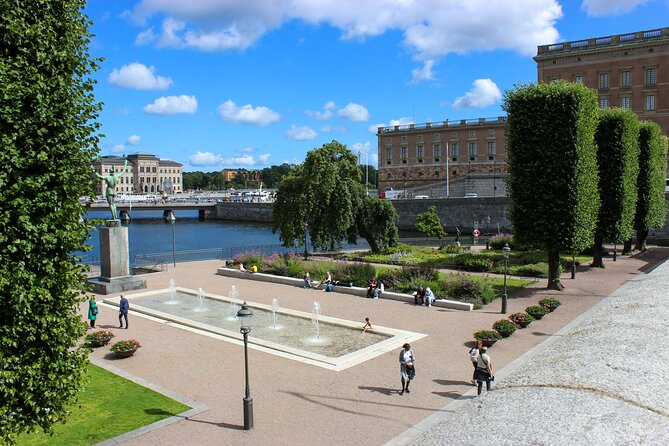
Kungstradgarden gives the tour room to breathe. This central park is used to explain Stockholm’s green spaces and the way public gardens shape the city. The discussion begins with the garden’s origins in the 15th century and follows its changes through different periods.
The guide also connects the park to several architectural styles, from Gothic and Baroque influences to modern design. That broad sweep is useful because Stockholm can sometimes look visually calm at first glance. Once you know what to look for, changes in period and purpose become easier to spot.
The park is also where you hear about falu red paint, one of Sweden’s most recognizable colors. The detail may sound small, but it is exactly the sort of subject that makes a walking tour worthwhile. A familiar red cottage becomes part of a larger story about Swedish materials, rural identity, and architecture.
I like this stop because it keeps the tour from treating the city as a collection of private design shops. Public space matters just as much. Kungstradgarden shows how gardens, monuments, buildings, and pedestrian routes contribute to the feel of central Stockholm.
The 45-minute timing gives this section more breathing room than the theater stop. Still, weather will affect your enjoyment. The experience requires good weather, and the park portion will be less pleasant in rain or strong wind. If poor weather cancels the tour, you can choose another date or receive a full refund.
Skeppsholmen and the final view toward the Nationalmuseum
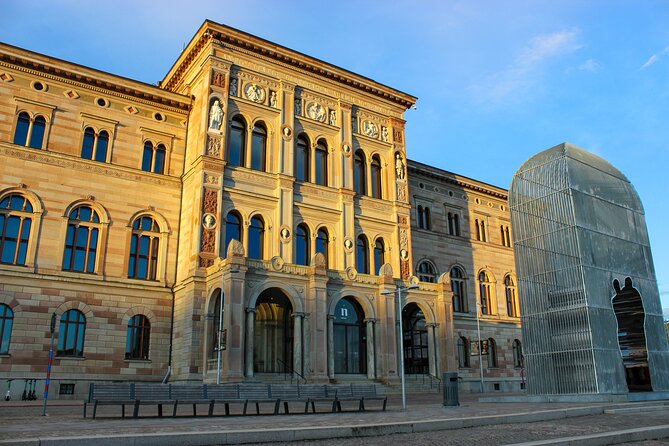
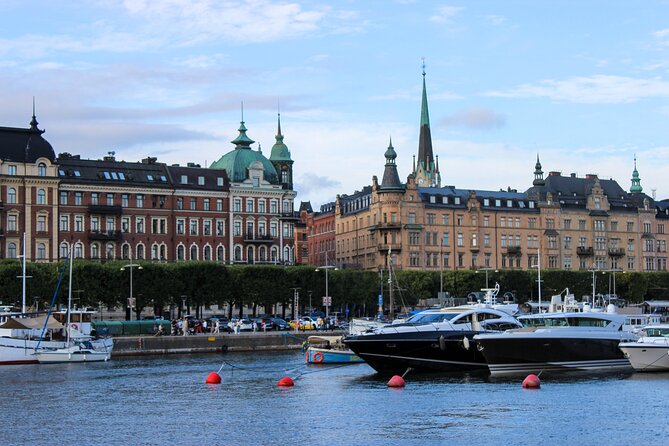
The route ends at the Nationalmuseum on Södra Blasieholmshamnen. The final section includes Skeppsholmen, one of the prettiest islands in central Stockholm, and views toward the Old Town.
This is a strong finish for a tour about art, architecture, and design. Skeppsholmen is associated with important museums, including the Nationalmuseum, Moderna, and ArkDes. You will hear about art and architecture as the walk reaches its last point, which can help you choose where to spend more time later.
The tour ends in front of the Nationalmuseum, not with admission to the museum itself. That distinction matters. The price covers the guided walking experience and access to design shops, but the description does not include entry to the Nationalmuseum, Moderna, or ArkDes.
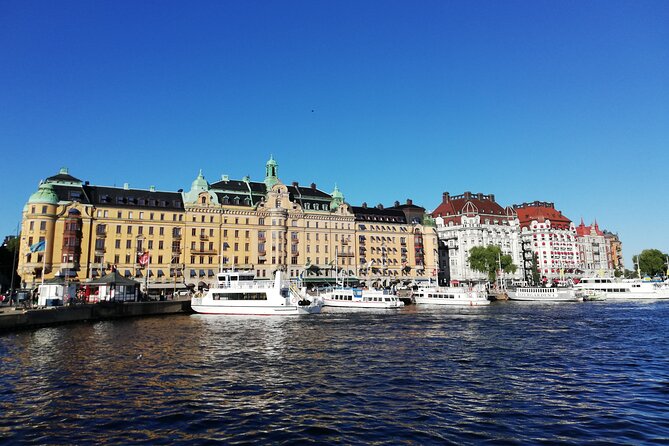
The waterfront setting also gives you a change of scale. Earlier, you are looking closely at shopfronts, upholstery, and façades. Here, you can look across the water toward the Old Town and think about how the city’s islands, public buildings, and cultural institutions fit together.
If you want to visit the Nationalmuseum after the tour, this ending is convenient. You will already be at the entrance area, and you can plan a separate museum visit around the tour’s finish. Just allow extra time and confirm opening hours for your chosen date.
What $61.62 buys you
At $61.62 per person, this is not the cheapest way to walk around Stockholm. You can see many of these streets and parks on your own for free. The price makes more sense if you want a guide to connect the pieces and if you value a small group.
You are paying for roughly three hours of English-language explanation, a planned route through several central areas, access to design shops, and a group limited to 10 people. There are no listed admission fees for Östermalm, the Royal Dramatic Theater, or Kungstradgarden, and the market is included as part of the experience. Paid museum entry is not included.
I would compare the cost with what you want from the day. If you mainly want photographs and a general stroll, self-guided walking may be enough. If you want to understand why a shop, theater, park, or building matters, the fee is easier to justify.
The strongest value comes from the guide’s storytelling. Olesia was specifically praised for making places come alive, allowing time for independent browsing, and keeping a private tour intimate. That suggests a good fit for you if you prefer conversation and interpretation over a rigid lecture.
The rating is 4.7 from 11 reviews, with 91 percent recommending the experience. That is encouraging, though the sample is small. I would treat it as a promising sign rather than a guarantee that every guide or departure will feel identical.
Who should book this walk
I would recommend it to anyone interested in Swedish design, architecture, interiors, public spaces, or cultural history. It is especially useful if you are new to Stockholm and want a clear introduction before visiting its museums.
It also suits couples, solo visitors, and small groups who prefer a slower, more personal format. The group limit of 10 makes it less formal than a large sightseeing tour, while the three-hour length is long enough to cover real ground without taking over your entire day.
This may not be the best choice if your main priority is food. You visit Ostermalms Saluhall, but the tour is not a dedicated tasting experience. It may also disappoint if you want extensive museum time, indoor access to the theaters, or a shopping discount.
Wear comfortable shoes and leave room in your schedule for the walking between stops. The route includes outdoor areas, and travel time counts within the stated duration. Since good weather is required, check the forecast and keep your plans flexible.
Booking confirmation is provided at the time of booking. Service animals are allowed, the route is near public transportation, and most people can participate. Free cancellation is available up to 24 hours before the start time. Changes or cancellations inside that window are not accepted for a refund.
Should you book the Scandinavian Art, Architecture and Design Tour?
Book it if you want Stockholm explained through its streets, shops, parks, theaters, food hall, and museums rather than through one enclosed attraction. The combination of Östermalm design businesses, Ostermalms Saluhall, Kungstradgarden, and the Nationalmuseum area gives the tour a useful range.
I would choose it early in a Stockholm visit, especially if Swedish design is new to you. The best reason to book is the chance to ask questions and browse at your own pace in a group of no more than 10.
Skip it if you want a museum ticket, a full food tour, or a deep look inside the Royal Dramatic Theater and Royal Swedish Opera. For an English-speaking introduction with a personal guide, a manageable route, and a strong design focus, the price is fair.
FAQ
How long does the tour last?
The tour lasts approximately three hours, including travel time between parts of the route.
Where does the tour begin?
It begins at Svampen, Stureplan, in Östermalm, Stockholm.
Where does the tour end?
The tour ends in front of the Nationalmuseum at Södra Blasieholmshamnen 2.
What language is the tour offered in?
The tour is offered in English.
How many people can join?
The maximum group size is 10 people.
Is museum admission included?
The tour ends at the Nationalmuseum, but admission to the Nationalmuseum, Moderna, and ArkDes is not listed as included.
Does the tour include design shopping?
Yes. Access to design shops is included, and the experience allows time to browse furniture, home accessories, and textiles.
Does the tour visit a food market?
Yes. The route includes about 30 minutes at Ostermalms Saluhall, a major Stockholm food hall and 19th-century architectural landmark.
Is the tour suitable for most people?
Most people can participate. The tour is near public transportation, and service animals are allowed.
Can I cancel for a full refund?
Yes, if you cancel at least 24 hours before the experience start time. Cancellations made less than 24 hours before the start are not refunded.
Just added around Stockholm
- World War II Stockholm Old Town Walking Tour and Army Museum★ 4.6 · 4 reviews
- Stockholm: Archipelago Guided Boat & Walking Tour of Vaxholm★ 3.1 · 23 reviews
- Vaxholm & Stockholm Archipelago: Guided Excursion, Day Trip★ 4.8 · 41 reviews
- Stockholm: Underground Metro Art Ride with a Local Guide★ 4.6 · 39 reviews
- Minivan Arrival Transfer Stockholm Airport ARN to Stockholm City★ 4.5 · 8 reviews
- Airport Transfer: Airport ARN to Stockholm by Business Car★ 4.0 · 3 reviews
- Arlanda Express Train Airport and Stockholm City Transfer★ 5.0 · 3 reviews
- Traditional Persian Cooking Class in Stockholm with a Local★ 5.0 · 20 reviews
Tours, compared.



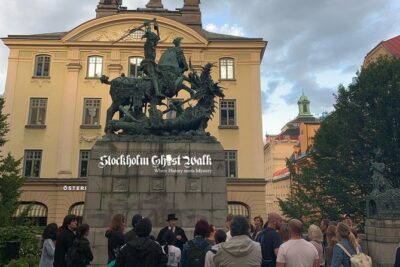
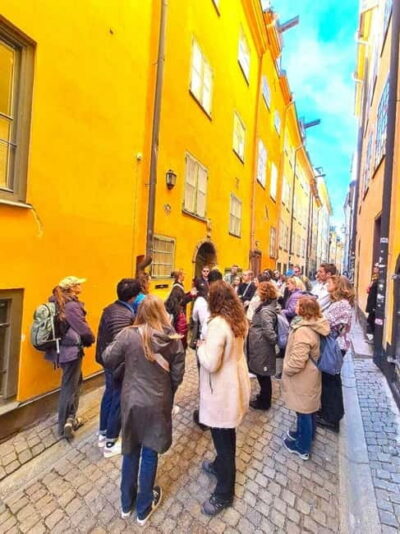
The Original Stockholm Ghost Walk and Historical Tour – Gamla Stan
Read our review →

Browse the lists this tour appears in