

Reviewed · OLD TOWN WALKING TOURS
Gothenburg: Haga Old Town Walking Tour
Haga’s appeal is easy to grasp: one minute you’re on a pleasant pedestrian street lined with old wooden buildings, and the next you’re hearing how this once rough neighborhood became one of Gothenburg’s most sought-after areas. Haga Nygata is the visual star, but the stories behind the houses give the stroll its meaning.
I like the way the tour connects architecture with daily Swedish life, rather than treating Haga as a pretty backdrop. I also like the small-group feel reported by many participants, with guides such as Sarah, Sara, Kalina, Luka, and David answering questions and offering useful tips for cafés, restaurants, and other Gothenburg sights.
The main catch is the climb to Skansen Kronan, a former fort above the district. The view is worthwhile, but the hill is steep, and one participant had to wait below. Also, the duration is described as both 1.5 and 2 hours, so allow two hours when planning your day.
Key points to know before you book
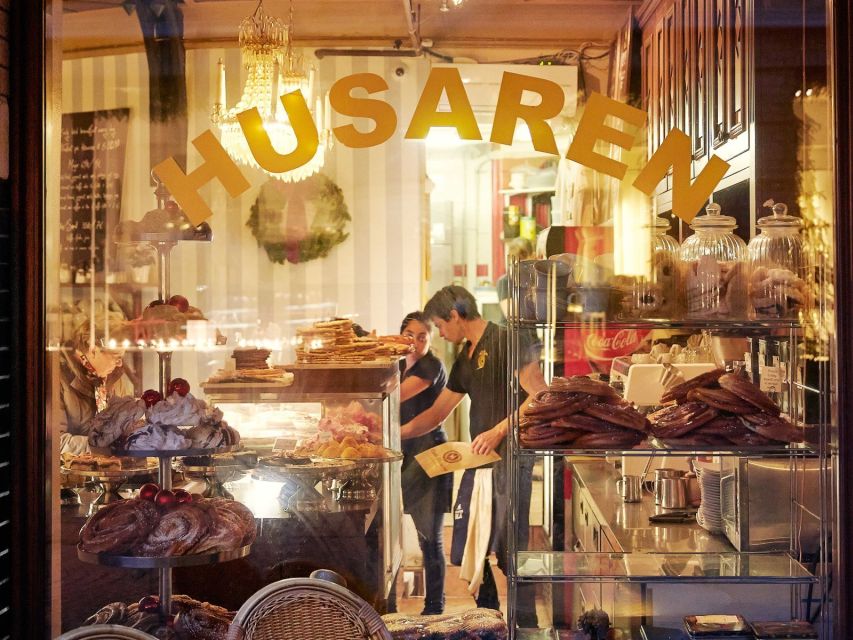
- Haga Nygata supplies the classic Gothenburg view: Expect well-preserved wooden buildings, independent shops, cafés, and food stops along the main pedestrian street.
- The architecture has a local signature: Many houses are landshövdingehus, with a brick ground floor and wooden upper floors.
- The guide adds the real value: Sarah, Sara, Kalina, Luka, and other local guides have brought in stories about Haga, Gothenburg, Swedish culture, and modern life.
- Skansen Kronan may be part of the walk: The former fort offers broad city views, but reaching it requires a steep uphill walk.
- Small groups can feel almost private: Several bookings were solo or had only a few participants, allowing plenty of questions and flexible conversation.
- The price buys orientation, not just sightseeing: At $55, the tour makes the most sense early in your stay, when local advice can shape the rest of your time in Gothenburg.
Why Haga is more than a pretty street
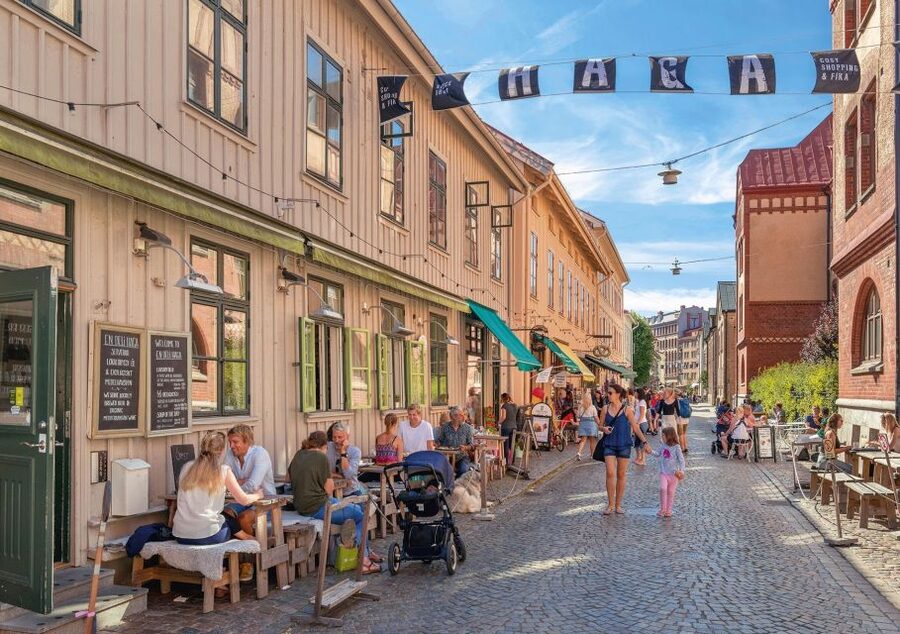
Haga is one of Gothenburg’s oldest neighborhoods, dating to the mid-17th century. Its old houses and narrow streets give you a sense of age, but the district is not preserved as a frozen museum.
The neighborhood once had a poor reputation and was seen as a slum in the 19th century. Today, it is one of Gothenburg’s most popular areas for cafés, delicatessens, and independent shops. That change is the heart of the tour. You are not simply admiring old façades. You are seeing how a working-class district changed and how Gothenburg has chosen to present that past.
I find this kind of context useful because Haga can otherwise look almost too polished. The painted wood, café windows, and pedestrian traffic make it easy to miss the harder chapters. A local guide can point out what changed, what was preserved, and how the district fits into the wider city.
The tour is also a good introduction to Gothenburg itself. Several guides have used Haga as a starting point for explaining the city’s development, Swedish customs, education, family leave, and everyday life. That wider view is especially helpful if you are in town for only a short visit.
More Walking Tours in Gothenburg
- Gothenburg Private Walking Tour with a Local
★ 4.0 · 36 reviews - Make Your Own Tour – Guided Walking Tour
★ 4.5 · 32 reviews - Best of Gothenburg: Private Walking Tour with a Local
★ 4.6 · 24 reviews
Haga Nygata and the landshövdingehus
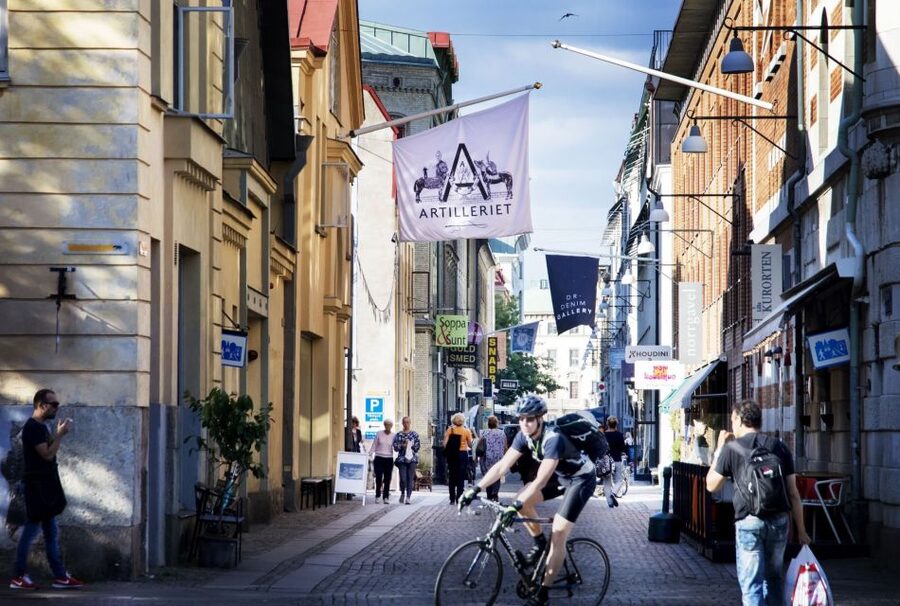
The walk centers on Haga Nygata, the district’s best-known pedestrian street. This is where you get the classic photographs: timber-fronted houses, older shop buildings, café seating, and a street made for walking rather than rushing through by car.
Look closely at the construction of the houses. The characteristic Gothenburg style is called landshövdingehus. These buildings combine a brick ground floor with wooden upper floors. The brick base helped protect against fire, while the wooden stories gave the houses the warm appearance that now makes Haga so appealing.
A guide can make these buildings easier to read. Instead of seeing a row of similar façades, you begin to notice changes in materials, scale, and use. A building may have a past tied to trade, housing, or neighborhood life, while its ground floor now serves coffee or sells local products.
The street is also the most commercial part of Haga. You will find cafés, delicatessens, and small independent shops, but the tour is not a shopping trip. The value is learning which parts deserve another look after the walk and which places suit your tastes.
Several guides have offered practical suggestions for coffee, cake, dinner, and later sightseeing. One frequently useful tip is to stay in the area after the tour for a fika, the Swedish pause built around coffee and something sweet. The tour does not include food or drinks, so budget separately if you want to stop afterward.
From rough reputation to fashionable district
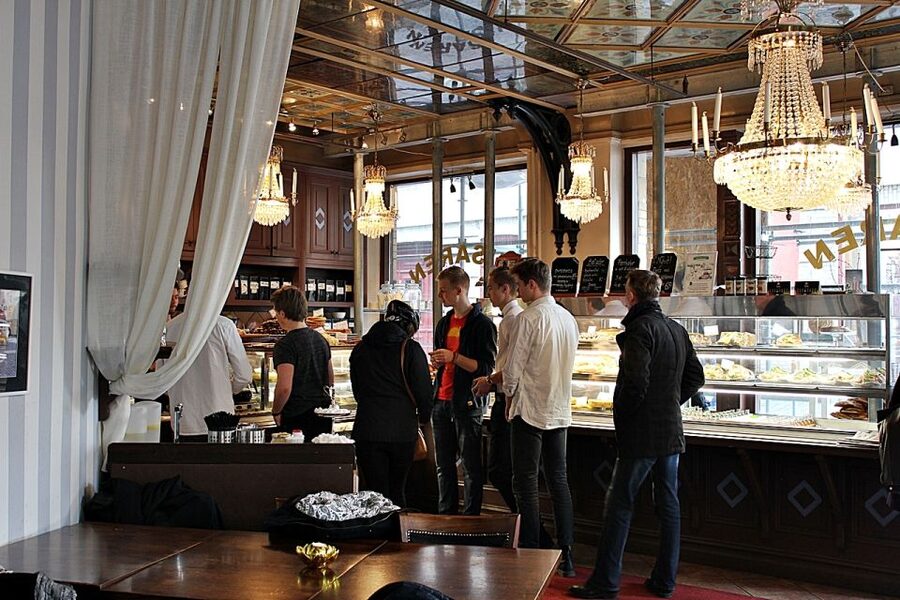
Haga’s past gives the walk some bite. In the 19th century, it was associated with poverty and a seedy reputation. That detail matters because the present-day cafés and restored wooden houses can make the neighborhood seem effortlessly charming.
Your guide can explain how Haga moved from an unfashionable residential area to one of Gothenburg’s trendiest districts. The change is an example of successful gentrification, though that word also invites useful questions about who benefits from neighborhood change and what gets lost when property values rise.
The supplied information does not give a fixed list of every stop, and that is probably sensible. A walking tour can adjust to the group, the weather, and the guide’s interests. Sarah and Sara, in particular, have been praised for discussing both the past and the experience of living in Gothenburg today. Kalina has also been singled out for combining local stories with advice about the rest of the city.
Expect interpretation rather than a long string of dates. Guides have used photographs, personal observations, folklore, and stories about particular buildings to make the past easier to picture. David, for example, carried images to support his stories and extended one private tour by about an hour to show additional places.
That kind of flexibility is a real benefit when the group is small. It also means your experience may depend somewhat on the guide and the questions you bring. If you enjoy conversation about Swedish society, ask about modern life. If you care more about architecture, ask the guide to focus on buildings and restoration.
The climb to Skansen Kronan
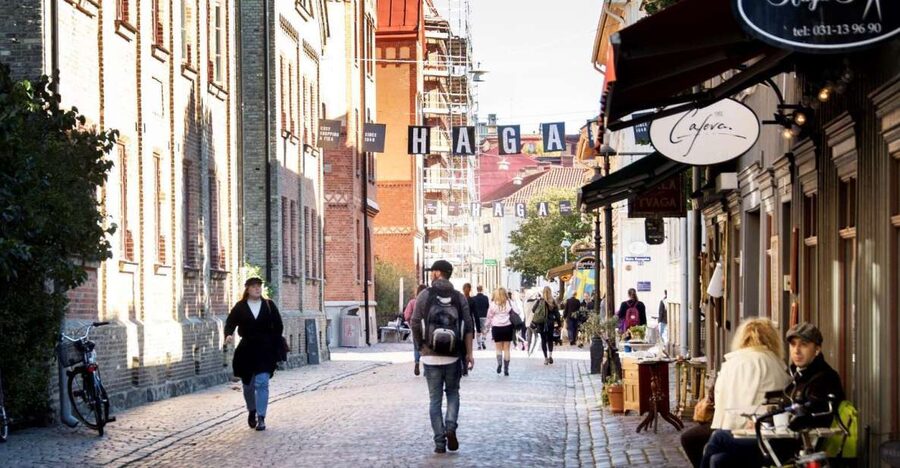
One important practical detail is the possible walk to Skansen Kronan, the former fort on the hill above Haga. The view over Gothenburg is a strong reason to make the climb, and it adds a sense of place that you cannot get from the flat streets below.
The drawback is physical. The hill is steep enough that it may be difficult for anyone with mobility concerns. One participant had to remain near the bottom while the rest of the group continued upward. Another account notes that the guide changed the route to reunite the group afterward.
This is worth knowing before you arrive, especially because the activity is described as wheelchair accessible. The accessibility statement and the steep approach to the fort do not tell exactly the same story. If you use a wheelchair or have difficulty with hills, contact the provider before booking and ask whether the Skansen Kronan section can be skipped or adapted.
For everyone else, wear shoes with a decent grip and do not treat this as a completely flat city stroll. The climb is not the whole tour, but it can shape the pace and effort of the outing.
More old town walks in Gothenburg:
- Walking Tour of Stockholm Old Town
★ 5.0 · 1,175 reviews - The Original Stockholm Ghost Walk and Historical Tour – Gamla Stan
★ 4.5 · 1,165 reviews - Stockholm: Old Town Walking Tour with Local Guide
★ 4.7 · 719 reviews - Walking Tour of Stockholm’s Old Town, Gamla Stan
★ 5.0 · 451 reviews
What the guides add to the walk
The strongest part of this experience is the human delivery. Participants have praised Sarah and Sara for clear storytelling, local insight, humor, and generous time. Kalina has been described as friendly and engaging, while Luka has been praised for keeping the tour informative and entertaining. Other named guides include David, Helena, and Karen.
The names matter because this is not an audio tour with a fixed script. A local guide can respond when you ask about Swedish education, parental leave, food, city neighborhoods, or where to spend the afternoon. One solo participant ended up having a detailed conversation about life in Sweden, including free education through university level and maternity and paternity leave.
You should also feel free to ask for recommendations that match your plans. Guides have suggested cafés, restaurants, bars with views, churches, sightseeing stops, and places to buy authentic souvenirs. These tips can be more useful than a general list because you can explain what you like and how much time you have.
The group size is not guaranteed in the information provided, but many bookings have been very small. Several people found themselves alone or with only one other participant. That creates a pleasant private-tour feeling without necessarily paying a private-tour rate.
A larger group would likely be less personal, but the same route should still provide the main architecture and history. If personal conversation is important to you, choose a time with availability and be prepared for the possibility that the group size may vary.
Pace, duration, and meeting point
The meeting point is outside the main entrance to Haga Church. This is important because one participant received older or conflicting directions involving Café Husaren on Haga Nygata and found the guide waiting at the church instead. Confirm the meeting point in your current booking details before setting out.
The duration is listed in different places as 1.5 hours and 2 hours. Several participants describe tours lasting exactly two hours, while the activity details also refer to a 1.5-hour duration. I would reserve a full two-hour block, then add time afterward if you want coffee or shopping.
That extra margin also protects you from the natural pauses of a walking tour. Questions, photographs, the hill to Skansen Kronan, and recommendations can all stretch the outing. One guide even spent about an hour beyond the expected time with a participant, though you should not assume that will happen on every booking.
The pace has generally suited a relaxed neighborhood walk. One guide adjusted the start time because of heavy rain, and another handled a very hot midday outing with care. Still, Gothenburg weather can change quickly, so bring a rain layer and dress for standing outside.
English is the stated tour language, and the activity has a live English-speaking guide. Gratuity is not included.
Is $55 a fair price?
At $55 per person, this is not the cheapest way to wander Haga. You can walk Haga Nygata on your own for free, read the façades, and choose a café without a guide.
The question is what you want from the visit. If you only want photographs and a pleasant street, save the money. If you want to understand why Haga looks the way it does, how its social role changed, and how it connects to Gothenburg’s wider story, the price is easier to justify.
I see the best value in booking it near the start of your stay. A guide can help you decide where to eat, which areas to visit, and how to use the rest of your afternoon. That orientation is especially useful if you have only a few hours in Gothenburg. One participant who had a short stop in the city found the walk a good way to get a general sense of what deserved more time.
The price also compares favorably if your group ends up small. A solo booking or a group of three can feel much more personal than a standard city walk. You are paying for access to local explanation and conversation, not merely the act of walking from one street to another.
Who will enjoy this Haga walk?
This tour suits first-time visitors who want an introduction to Gothenburg without spending half a day on a bus or inside a museum. It is also a good fit if you like architecture, social history, food suggestions, and informal conversation about local life.
You will get the most from it if you ask questions. The guides have shown a willingness to discuss Swedish culture, education, family policies, food, neighborhoods, and daily routines. A quiet group can still enjoy the prepared stories, but an engaged group may get more personal advice.
It also works well for solo visitors. Several solo bookings became flexible, almost private walks, with more time to ask questions and adjust the conversation. Couples and small families should appreciate the manageable length.
I would be more cautious for anyone who cannot manage a steep hill. The listing says the activity is wheelchair accessible, but Skansen Kronan can present a real obstacle. Ask ahead about an accessible route or a version that stays on the lower streets.
Should you book the Haga Old Town Walking Tour?
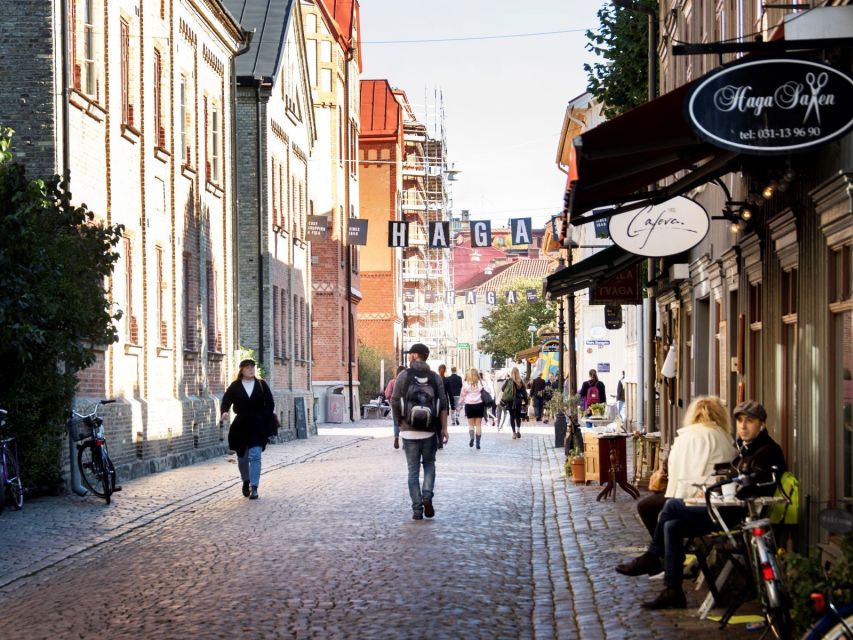
Book it if you want Haga to make sense, not just look attractive. The wooden houses, old working-class story, local folklore, and advice about cafés and other Gothenburg sights add much more than a self-guided stroll.
Skip it if you prefer exploring at your own speed, have very limited mobility, or mainly want to shop and eat. Also allow two hours, despite the 1.5-hour wording, and confirm that the meeting point is Haga Church.
For most first visits, I would book this early in the trip. The route is short, the English-language guiding is practical, and the chance of a small group gives the $55 price real value. Just come ready for a hill, changing weather, and a neighborhood that is more complicated than its pretty wooden façades suggest.
FAQ
Where does the Haga walking tour meet?
You meet your guide outside the main entrance to Haga Church.
How long does the tour last?
The activity details list 1.5 hours, while other information describes it as a 2-hour walk. Several participants reported tours lasting exactly two hours, so plan for the longer duration.
What language is the tour in?
The live tour is conducted in English.
How much does the tour cost?
The listed price is $55 per person.
Is a local guide included?
Yes. A professional local guide leads the walking tour.
What part of Haga will I see?
The walk includes Haga Nygata, old wooden houses, historic buildings, cafés, shops, local sights, and other points around the Haga district.
Will the tour visit Skansen Kronan?
The walk can include Skansen Kronan, the former fort on the hill above Gothenburg. The climb is steep, but the views from the top are described as excellent.
Is the tour wheelchair accessible?
The activity is marked wheelchair accessible. However, the possible climb to Skansen Kronan can be difficult for people with mobility issues, so ask the provider about the route before booking.
Are food and drinks included?
No. Food, drinks, and gratuity are not included. Guides may recommend cafés, cake, restaurants, and other places to eat after or during your time in Haga.
Can I cancel for a full refund?
You can cancel up to 24 hours in advance for a full refund. The activity also offers a reserve-now, pay-later option.
Just added around Gothenburg
- Explore the Instaworthy Spots of Gothenburg with a Local★ 5.0 · 3 reviews
- Gothenburg : Private Walking Tour with A Guide (Private tour)★ 4.0 · 19 reviews
- Private Boat Ride in Gothenburg with pickup★ 4.0 · 9 reviews
- Historical Walking Tour in Restaurant and Bars in Central City★ 5.0 · 9 reviews
- Discover Gothenburg’s most Photogenic Spots with a Local★ 4.5 · 7 reviews
- Haga Sightseeing Tour★ 4.0 · 11 reviews
- Guided Brewery Tour on Bicycle★ 5.0 · 5 reviews
- Guided boat tour to Vinga in Gothenburg★ 3.5 · 8 reviews
Old Town Walking Tours, compared.
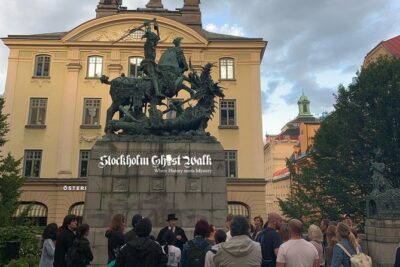
The Original Stockholm Ghost Walk and Historical Tour – Gamla Stan
Read our review →
Walking Tour of Stockholm’s Old Town, Gamla Stan
Read our review →
Old Town Guided Walking Tour (English / Deutsch)
Read our review →
Secrets of Gamla Stan Guided Tour w/ Fika Option
Read our review →Browse the lists this tour appears in