
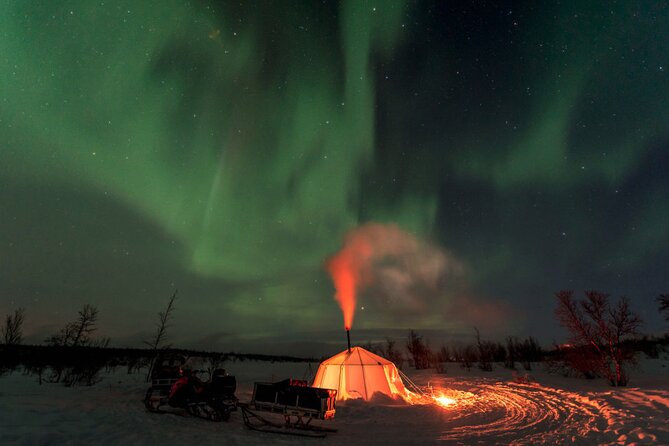
Reviewed · NORTHERN LIGHTS TOURS
The Ultimate Aurora Photo Adventure
Abisko is one of Europe’s best places to chase the Northern Lights, and this tour gives you more than a simple sky-watching outing. You’ll learn to use a preset DSLR and tripod, then head into the dark by foot, 4×4 van, or snowmobile-pulled sleigh. I like the hands-on camera lesson and the chance to reach a darker spot than your hotel grounds.
I also like the small-group design, at least in principle, and the warm overalls, headlamp, fire, snacks, coffee, tea, and hot lingonberry juice. Guides including Michelle, Fabian, Anna, Romy, Gavin, and Félix have helped visitors make the most of weak aurora displays and even create light-painting photos. The catch is simple: the Northern Lights are never guaranteed, and one account described a group of 15 rather than the advertised maximum of eight.
Key points to know before booking
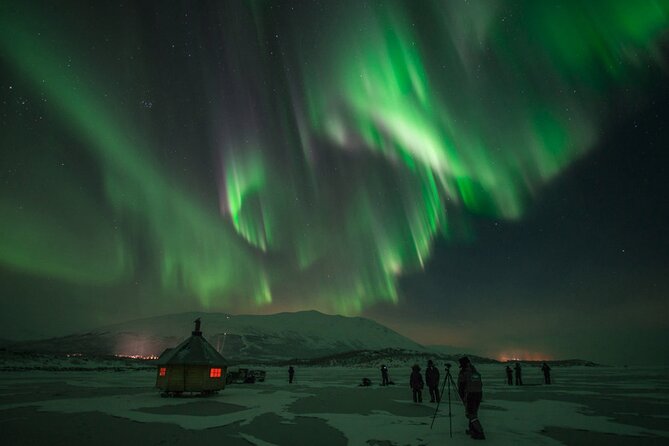
- Three possible ways to chase the aurora: Walk to a nearby teepee, ride in a 4×4 van, or travel by sleigh behind a snowmobile.
- Camera gear is supplied: You receive a DSLR, lens, tripod, backpack, warm overalls, and headlamp.
- Bring your own SD card: It is not included. A minimum of 4 GB is recommended, and a 32 GB card costs 250 SEK if needed.
- The guide can make a big difference: Michelle, Fabian, Anna, Romy, Gavin, and Félix are named for helpful instruction, stories, and persistence.
- Weather controls the evening: Cloud, wind, and weak aurora can leave you with little to photograph, even in Abisko.
- Pickup is included: Transfers run from hotels in Abisko and Björkliden, with the activity ending back at the meeting point.
Why Abisko makes a strong aurora base
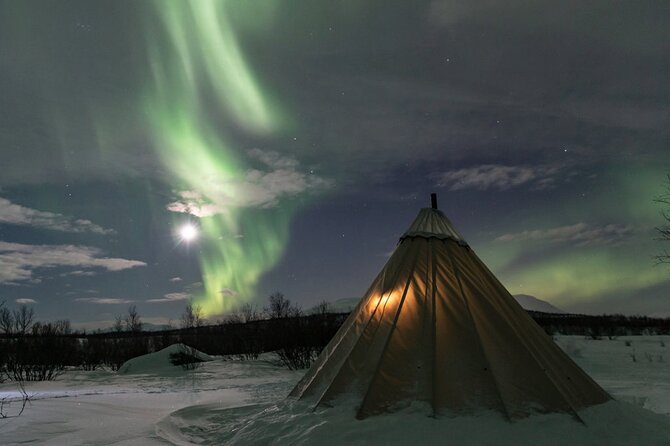
The appeal here is the setting. Abisko National Park is known for frequent clear skies, which matters more than almost anything else on a Northern Lights outing. A strong forecast is useless if cloud blocks the sky, so Abisko’s tendency toward clearer conditions gives this tour a sound starting point.
Still, clear skies do not promise bright green curtains overhead. The aurora depends on solar activity, cloud, wind, and timing. You may see a dramatic display, a faint glow, or nothing at all. That uncertainty is part of the Arctic night, but it is also the main reason to keep your expectations sensible.
The tour runs for about four hours, starting at 7:45 p.m. and returning no earlier than 11:30 p.m. The return may be later if the lights become active. You are not simply paying for a guaranteed photograph. You are paying for transport, Arctic clothing, camera equipment, instruction, and an organized search in a remote setting.
More northern lights nights in Sweden:
- Kiruna Northern Lights Tour with Photographer
★ 5.0 · 735 reviews - Kiruna: Northern Lights Tour with Photos
★ 4.9 · 333 reviews - Northern Lights Tour from Kiruna to Abisko with Dinner
★ 5.0 · 311 reviews
Starting in Abisko with pickup and warm gear
Pickup is offered from all hotels in Abisko and Björkliden. If you stay in Abisko, be in your hotel lobby by 7:30 p.m. Pickup from Björkliden is at 7:15 p.m. The listed meeting point is STF Abisko Turiststation, Abisko Turiststation 2.
That timing is useful in winter, when you do not want to wait outside in the cold or find your way through unfamiliar snow after dark. The activity ends back at the meeting point, so you can plan the rest of your evening without arranging a separate ride home.
The operator provides warm overalls and a headlamp, along with a backpack. Heavy-duty Arctic boots are not included, though they can be rented. I would treat proper footwear as important, especially if the group leaves the road or spends time standing in deep snow. Warm layers are still wise, since supplied overalls do not replace gloves, socks, and a good base layer.
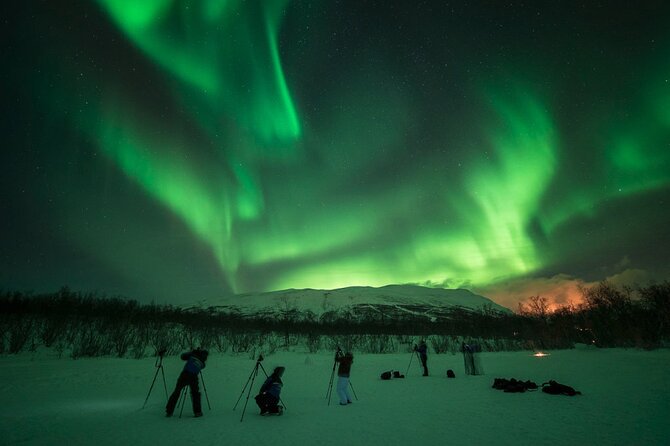
Before setting out, you receive a DSLR camera and lens set up for Northern Lights photography. The guide goes over the basic camera controls and explains how to use the tripod. This is a useful feature if you normally use a phone or automatic camera, since aurora photography needs long exposures and a steady setup.
Three ways to reach the night sky
The evening can take one of three forms, depending on the forecast and conditions.
A walk to a nearby teepee is the simplest option. You may stay close to the tourist station, set up the cameras, and warm yourself by a fire while watching the sky. This arrangement can feel relaxed and social, particularly when the air is cold and the aurora is slow to appear.
The tradeoff is that a nearby location may not feel like much of a chase. One disappointing evening involved waiting near the STF tourist station, which felt little different from stepping outside the hostel. If the sky is clear and the aurora is active, location matters less. If activity is weak, a short walk can make the tour feel less substantial.
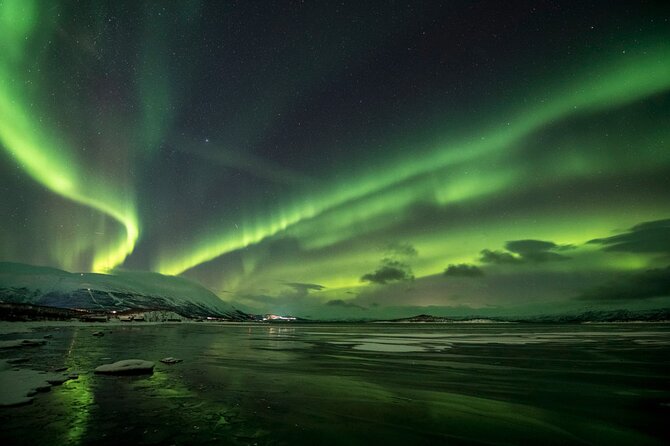
A 4×4 van outing gives the guide more freedom to seek clearer skies or a better view. One reported itinerary included a drive to a frozen lake, followed by a return to Abisko. That kind of change in scenery can make the evening more varied, although the exact route depends on weather and the guide’s judgment.
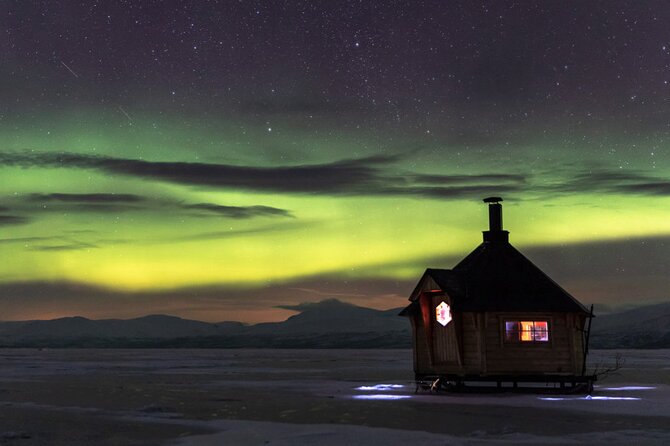
The third option is a cozy sleigh pulled behind a snowmobile. This carries you to a wilderness camp, where darkness and distance from nearby lights can improve the setting for photography. A sleigh ride also adds a memorable Arctic element that you cannot get by simply walking out of your accommodation.
The choice is not presented as a fixed menu. The guide decides which option makes the most sense for the conditions. That flexibility is helpful, but it also means you should not book expecting a particular vehicle or destination.
Learning to photograph the aurora
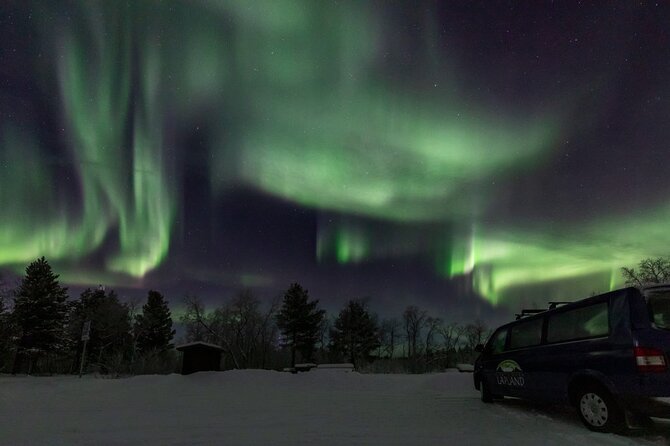
The camera lesson is the heart of this experience. The DSLR and lens are preset to help you capture the lights, and the guide explains the basic skills needed to operate the setup. You do not need to arrive as a photographer, but you do need to pay attention during the short instruction period.
The tripod matters because the camera must remain still during the exposure. Once the camera is set, you can frame the sky, include snow or trees in the foreground, and wait for the aurora to strengthen. The guide can help you adjust the setup and check whether the images are working.
The equipment is supplied, but the memory card is not. Bring your own SD card with at least 4 GB of storage. You can also buy a 32 GB card for 250 SEK. This is an easy detail to miss, and arriving without a card could leave you relying on a purchase during the evening.
The supplied camera gives you a better chance of making a proper night-sky image than a basic phone, but the result still depends on the sky. A faint aurora may produce a subtle image. Cloud, blowing snow, or truck lights can make the photographs disappointing even when the camera is set correctly.
Guides such as Michelle have been praised for helping everyone set up and for showing creative light tricks. Gavin and Félix kept one outing moving by trying light painting and making snow figures before the aurora finally appeared. Those small activities matter because you may spend a long time waiting in the cold.
Same city, a completely different kind of day:
- Stockholm: City Archipelago Sightseeing Cruise with Guide
★ 4.3 · 10,798 reviews - Stockholm: Skansen Open-Air Museum Admission Ticket
★ 4.5 · 3,427 reviews - Stockholm: Archipelago Boat Tour
★ 4.4 · 3,110 reviews - Stockholm: Highlights Boat Tour
★ 4.3 · 2,542 reviews
The human side of the experience
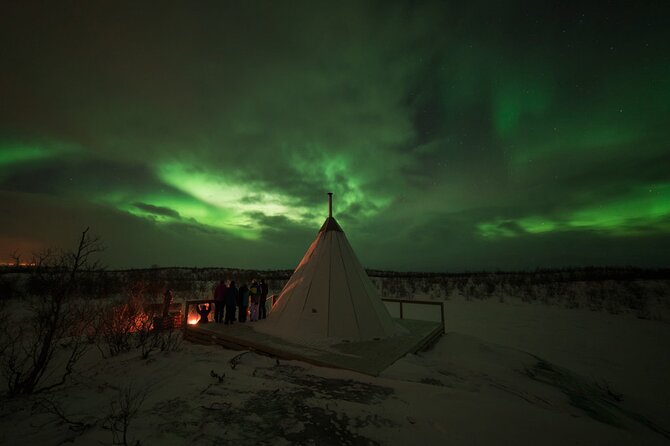
A good aurora guide needs more than camera skills. The evening works best when someone keeps the group warm, explains what is happening, and stays patient when the sky refuses to perform.
Romy has been singled out for tending the fire and keeping everyone comfortable while sharing her excitement about the chase. Fabian has been praised for explaining the aurora and Lapland, including on a night when no Northern Lights appeared. Anna and Michelle are also named for friendly, helpful instruction.
The tour includes coffee, tea, hot lingonberry juice, and snacks. These are welcome additions, but do not count on having a full supply beside you throughout the entire outing. At least one account described the drinks and snacks as being served mainly at the end for about 10 or 15 minutes.
The guide may also explain local culture and the natural world of Lapland. That gives the evening more meaning than a silent wait beside a tripod. You come away with a better sense of where you are, not just a folder of camera files.
Group size, comfort, and what can go wrong
The advertised maximum is eight people, which would be an excellent size for personal camera help and easier movement in the snow. A group of that size also makes the sleigh, fire, and camera lesson less crowded.
There is an important qualification. One account described a group of 15. That is a significant difference from the stated limit, particularly when everyone needs space around a tripod and access to the guide. I would confirm the expected group size before booking if personal instruction is a top priority.
The tour is not physically demanding in the usual sense, and most people can take part. You may stand outside for long periods, walk through snow, sit on a sleigh, or ride in a van depending on the plan. The cold is the bigger challenge. Rent the Arctic boots if your own footwear is not made for serious winter conditions.
The other risk is a static evening. One account described spending about three hours in one place while photographing clouds and vehicle lights. Another outing included a drive, a frozen lake, a teepee, and playful photography. The difference shows how much the weather and guide’s decisions shape the experience.
Is $183.07 a fair price?
At $183.07 per person, this is not a cheap way to see the Northern Lights. You can step outside in Abisko for free, and if the aurora is strong, you may take excellent phone photos without help.
The price makes more sense if you need equipment and instruction. A DSLR, tripod, warm overalls, headlamp, transport, guide service, drinks, snacks, and possible access to a wilderness camp are bundled together. Renting or buying similar items separately could cost more, especially if you are traveling without a camera.
The value drops sharply when the aurora forecast is poor and the group stays near the tourist station. The company cannot control the sky, but you are reasonable to want a clear plan when the chances are low. The stated policy offers a different date or full refund if poor weather causes the operator to cancel. It does not promise a refund simply because the aurora does not appear.
You can cancel for a full refund up to 24 hours before the start time. Changes or cancellations inside that window are not accepted for a refund. Since this tour is often booked about 22 days ahead, checking the forecast and your plans before the final day is sensible.
Who will get the most from this tour
I would choose this experience if you want a guided introduction to night-sky photography and do not want to carry winter camera gear to Sweden. It is also a good fit if you like the idea of a sleigh ride, a campfire, and stories about Lapland as much as the final photographs.
It suits first-time aurora photographers especially well. The preset camera removes much of the technical guesswork, while the tripod gives you a proper way to make long-exposure images. The guides can also help you turn a quiet evening into something more enjoyable through light painting, snow figures, and local stories.
I would hesitate if you already have a camera, tripod, warm clothing, and transport. In that case, you may be paying mainly for the search and the guide. If the group is larger than expected or the guide stays close to the hotel, the added value becomes harder to defend.
Families and mixed-age groups may appreciate the warm drinks and simple camera lesson, though the long outdoor wait can test younger children. Anyone who dislikes cold, uncertainty, or late returns should think twice.
Practical details for a smoother night
Bring your own SD card, and check that it has enough space before you meet the guide. A minimum of 4 GB is recommended, while 32 GB gives you more room for repeated attempts and creative shots.
Wear layers, warm gloves, and suitable winter socks. The supplied overalls help, but they are not a complete Arctic wardrobe. If your boots are ordinary city winter shoes, budget for the optional heavy-duty rental.
Keep your expectations focused on the experience rather than a guaranteed green sky. A successful night may mean a strong aurora, but it may also mean learning to handle a DSLR, seeing the sky above Abisko, riding a sleigh, warming beside a fire, or making playful light photos.
The tour is offered in English and uses a mobile ticket. Confirmation arrives when you book. It is near public transportation, pickup is included from Abisko and Björkliden hotels, and the listed activity is suitable for most people.
Should you book the Ultimate Aurora Photo Adventure?
Book it if you want a guided, equipment-filled night and would value help taking real Northern Lights photographs. The strongest parts are the camera instruction, warm clothing, possible sleigh or 4×4 outing, and guides who keep the evening pleasant when nature refuses to cooperate.
Skip it if you already have the right camera gear and are comfortable finding a dark place on your own. You should also pause if the forecast is poor and the operator has not offered a flexible rescheduling option. At this price, the tour is best when the group is genuinely small, the guide moves with the conditions, and the sky gives you at least something to chase.
FAQ
Where does the Ultimate Aurora Photo Adventure take place?
The activity takes place in and around Abisko National Park in Sweden. Depending on weather and the aurora forecast, the group may use a nearby teepee, travel by 4×4 van, or ride by sleigh to a wilderness camp.
How long does the tour last?
The experience lasts about four hours. It starts at 7:45 p.m., and the earliest return time is 11:30 p.m. The return may be later if the aurora becomes active.
Is hotel pickup included?
Yes. Round-trip pickup is included from all hotels in Abisko and Björkliden. Abisko pickup runs from 7:30 to 7:45 p.m., and Björkliden pickup is at 7:15 p.m.
Is camera equipment provided?
Yes. You receive a DSLR camera and lens, tripod, backpack, warm overalls, and headlamp. The guide gives you basic instructions for using the camera to photograph the Northern Lights.
Do I need to bring an SD card?
Yes. SD cards are not included, and a minimum of 4 GB is recommended. A 32 GB card can be purchased for 250 SEK if you need one.
Are food and drinks included?
Coffee, tea, hot lingonberry juice, and snacks are included. They may be served during a shorter warming break or near the end of the evening rather than continuously.
Are Arctic boots included?
No. Heavy-duty Arctic boots are available to rent during the tour, but they are not part of the included equipment.
What happens if poor weather cancels the tour?
If the operator cancels because of poor weather, you will be offered a different date or a full refund. The normal cancellation policy allows a full refund when you cancel at least 24 hours before the experience starts.
Just added around Sweden
- Wilderness Tour with Snowmobile & Ice Fishing★ 4.9 · 28 reviews
- World War II Stockholm Old Town Walking Tour and Army Museum★ 4.6 · 4 reviews
- Stockholm: Archipelago Guided Boat & Walking Tour of Vaxholm★ 3.1 · 23 reviews
- Vaxholm & Stockholm Archipelago: Guided Excursion, Day Trip★ 4.8 · 41 reviews
- West Sweden: Sea Kayak Delight in Nature Reserves★ 5.0 · 6 reviews
- Uppsala Must See 2h city walk – 2h tour of all big attractions!★ 5.0 · 4 reviews
- Stockholm: Underground Metro Art Ride with a Local Guide★ 4.6 · 39 reviews
- Self-Guided Audio Walking Tour Through Kurt Wallander’s Ystad★ 3.5 · 12 reviews
Northern Lights Tours, compared.
Northern Lights Tour from Kiruna to Abisko with Dinner
Read our review →
Northern Lights Guided Husky Sledding Adventure
Read our review →
Northern Light hunt with minibus to Abisko 7:30 pm
Read our review →
Browse the lists this tour appears in