Reviewed · GUIDED
Ice Climbing Experience with Certified Guide
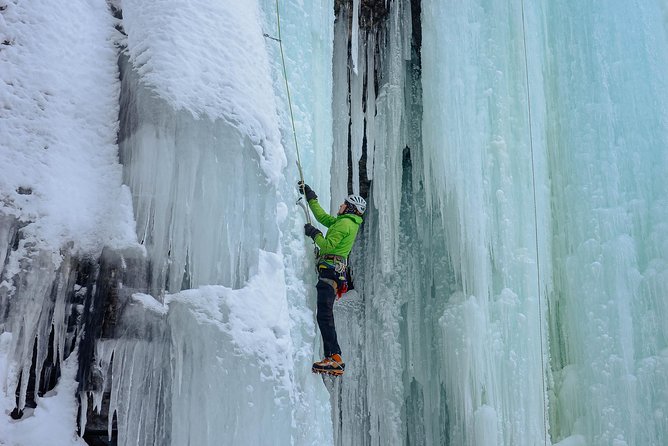
The striking part of this Abisko outing is simple: you use tools and techniques to climb a wall of real ice. With a certified guide belaying you from below, you can try a sport that looks extreme without needing past climbing experience. All technical gear is included, and the short drive from your accommodation keeps the morning or afternoon easy to manage.
I like the direct hotel pickup, especially in a cold place where finding the meeting point on foot is less appealing. I also like the patient, personal coaching. Guides such as Anna, Axel, and Aril have helped beginners with clear advice, steady encouragement, and careful belaying. The main consideration is effort: three hours on ice can be tiring, and poor weather may force a change of date or a cancellation.
Key points before you book
- No climbing experience required: Your guide teaches the basic steps before you tackle the ice.
- Full equipment included: Alpine boots, crampons, harness, and helmet are provided.
- Pickup covers several Abisko stays: Morning and afternoon departures are available from listed hotels, hostels, and mountain stations.
- A real physical challenge: You need a moderate fitness level, and the climb can be exhausting even when it is beginner-friendly.
- Weather matters: Wind, snow, and ice conditions can affect the outing, so keep some flexibility in your schedule.
- Three hours for $125.93: The price includes instruction, equipment, transport from listed pickup points, and a focused Arctic activity.
Reaching the icefall from Abisko
The outing begins with pickup at your accommodation, which is a welcome touch in Abisko. You do not need to search around town for a climbing school or carry a pile of cold-weather gear across the snow. Be ready five minutes before your scheduled time, then let the guide handle the short drive to the icefall.
Morning pickups begin at 9:30 from Abisko Mountain Lodge and abisko.net. Abisko Hostel and Abisko Guesthouse follow at 9:35, while the STF Mountain Station pickup is at 9:40. In Björkliden, pickup is listed for 9:50 from both Hotell Fjället and Gammelgården.
The same locations have afternoon pickups one morning or afternoon cycle later: 14:00, 14:05, 14:10, and 14:20. Check your exact pickup point and time when booking. The schedule is useful if you already have a morning activity planned, though the afternoon start means you should watch the daylight and weather forecast during your visit.
The drive is short, followed by a short walk to the climbing area. That matters. This is not a long approach march with a heavy pack, but you should still be ready to walk over winter ground in cold conditions. The exact icefall and route can depend on conditions, so do not expect a fixed sightseeing itinerary.
A few more Sweden half-days to weigh up
- Stockholm: City Archipelago Sightseeing Cruise with Guide
★ 4.3 · 10,798 reviews - Stockholm Archipelago Cruise with Guide
★ 4.0 · 1,125 reviews - Gothenburg: Archipelago cruise with guide
★ 4.3 · 1,002 reviews
Getting fitted with boots, crampons, and a harness
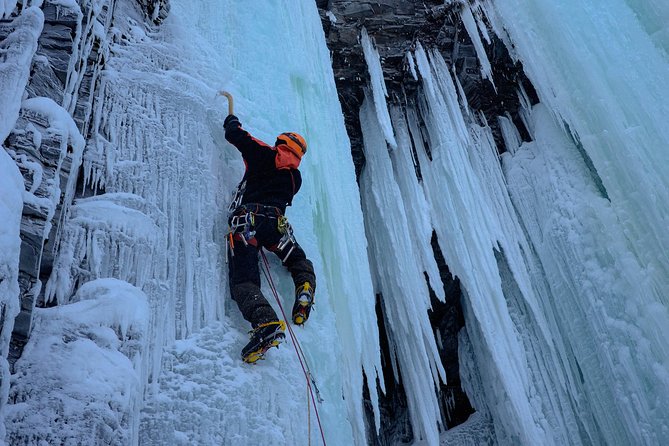
At the icefall, your guide fits you with the equipment that turns ordinary winter clothing into a climbing setup. The package includes alpine boots, crampons, a harness, and a helmet. The crampons give your boots grip on the ice, while the harness and rope system allow the guide to belay you as you climb.
This fitting stage is more important than it may sound. Good instruction begins with comfort and safety. Your boots need to work with the crampons, the harness must sit properly, and your helmet should stay secure while you move your head and look for the next foothold.
Bring warm clothing that lets you move your arms and legs. The activity information specifically advises dressing warmly, and that advice is worth taking seriously. You may be working hard during the climb, but you will also spend time listening, waiting your turn, and standing near a frozen wall. Cold hands and stiff clothing make a technical activity harder than it needs to be.
The supplied information does not list clothing rental, so plan on bringing your own warm layers. Keep your clothing practical rather than bulky. You need room to raise your arms, bend your knees, and work with the ice tools if they are used during your instruction.
Learning the first moves on vertical ice
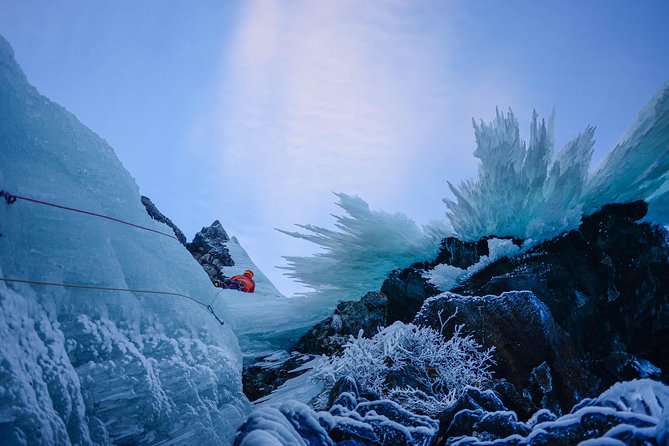
Your guide starts with the basic steps of ice climbing. You learn how to place your feet with crampons, use your balance, and move up a vertical sheet of ice without wasting energy. The task looks intimidating from below, but the instruction breaks it into small movements.
This is where the certified guide makes the experience accessible to beginners. You are not expected to arrive knowing how to climb, belay, or use mountain equipment. The guide controls the rope system and stays focused on your movement, offering technical advice as you go.
The best coaching is often very plain. Push through your legs instead of relying only on your arms. Keep your body positioned so the crampons can grip. Pause when you need to. Listen to the next instruction rather than staring at the top.
You may find that the mental challenge arrives before the physical one. A vertical ice wall can look like an unreasonable place to put your feet. The guide’s job is to keep the task measured and safe, not to rush you. A first climb may feel awkward, which is normal, and the steady encouragement reported from guides such as Anna, Axel, and Aril is especially useful when confidence drops.
Why the climb can feel harder than expected
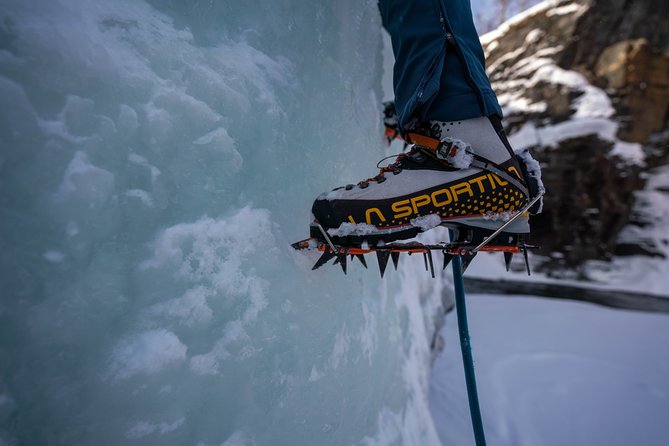
This is a beginner activity, not an easy activity. The distinction matters. You do not need previous experience, but you do need moderate physical fitness. The combination of cold, climbing movement, winter clothing, and concentration can wear you out.
One useful way to think about the effort is in short sections. You are not simply pulling yourself straight to the top in one burst. You are learning a sequence of foot placements and body movements, then repeating them while the rope supports you.
Some people reach a point halfway up where they want to stop. That does not mean the activity is unsuitable. It means the climb is doing what a good adventure should do: asking for effort while giving you a realistic chance to continue. The guide can offer a technical correction or a small push of motivation, and that may be enough to help you reach the top.
Be honest with yourself before booking. If you have trouble with moderate physical activity, or if cold conditions make outdoor exertion unpleasant, this may not be the right choice. If you are reasonably active and curious about trying something new, the beginner format gives you a clear starting point.
Same city, a completely different kind of day:
- Stockholm: Skansen Open-Air Museum Admission Ticket
★ 4.5 · 3,427 reviews - Stockholm: Archipelago Boat Tour
★ 4.4 · 3,110 reviews - Stockholm: Highlights Boat Tour
★ 4.3 · 2,542 reviews - Stockholm Pass: Save up to 50% – Includes Vasa Museum Ticket
★ 4.1 · 2,392 reviews
Safety, belaying, and the role of the guide
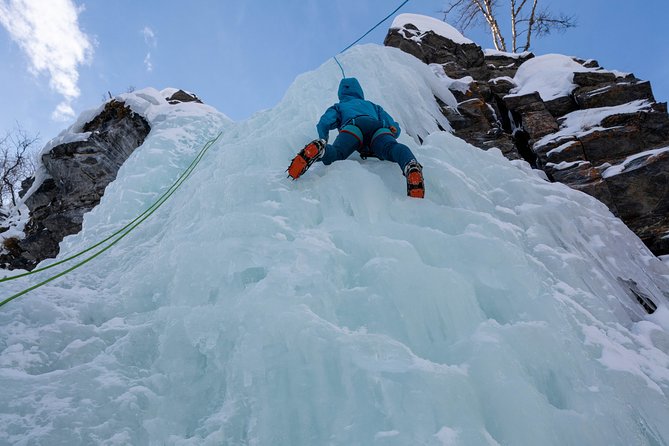
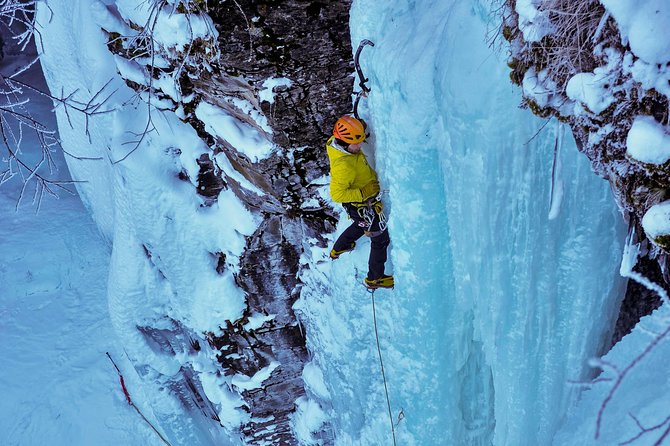
Safety is built into the experience through the equipment and the guide’s supervision. You wear a helmet and harness, use climbing gear supplied for the activity, and climb under the guide’s belay. The guide also explains how to move on the ice and stays involved throughout the climb.
A guide cannot remove every challenge. Ice climbing remains a real physical activity, and conditions can change. Strong wind and snowfall may make the climb feel more demanding, even though they can also add to the Arctic character of the outing.
The most useful sign of good guidance is not grand talk about danger. It is calm instruction at the right moment. Guides described in the supplied material gave technical tips, remained patient when confidence was low, and helped participants keep going. Aril was also noted for taking photographs from different angles, which can give you a lasting record of an experience that is hard to capture while you are busy climbing.
The maximum group size is 18. That is not a tiny group on paper, so ask about the expected group size if personal attention is a major concern. The experience can also operate with a very small number, including a reported outing that went ahead for one person. That suggests the scale may vary by date.
Wind, snowfall, and the Arctic setting
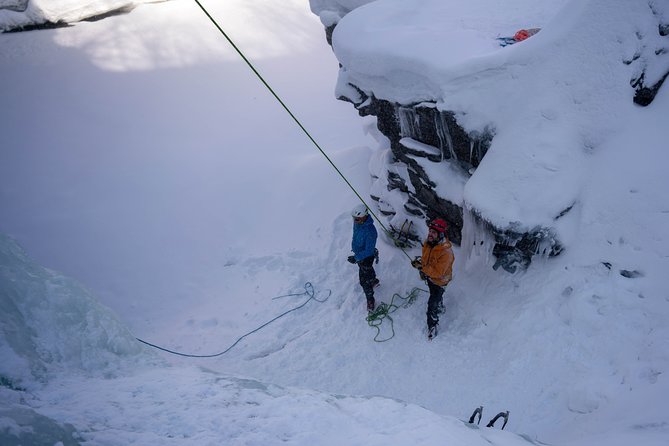
The weather is part of the outing, not just background scenery. One climb took place in heavy wind and snowfall and was still described as rewarding, though physically demanding. Those conditions can make the experience feel more wild, but they also demand better clothing, patience, and a willingness to work harder.
The operator requires suitable weather. If conditions are poor enough to cancel, you are offered another date or a full refund. This is sensible for an activity on frozen water, but it means you should avoid placing the tour on the only free afternoon of a tightly packed Abisko visit.
The icefall itself is the main attraction. You are not visiting a warm indoor climbing wall with predictable holds. The surface is frozen, uneven, and shaped by the weather. That gives the activity a stronger sense of place, but it also means the exact feel of the climb cannot be guaranteed in advance.
Dress warmly and accept that the day may not follow your ideal plan. In return, you get a distinctly Arctic experience rather than a generic fitness session.
What the $125.93 price includes
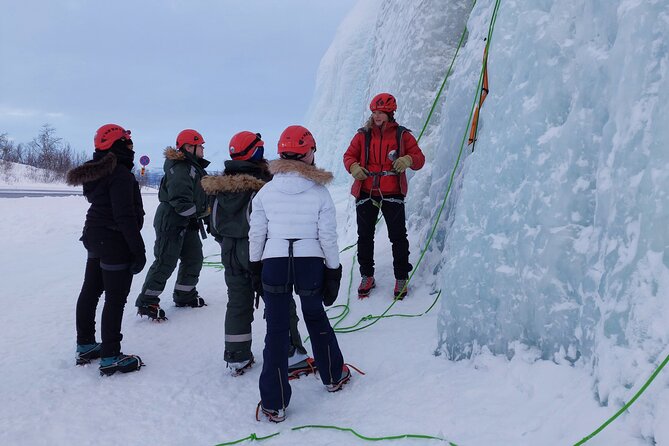
At $125.93 per person, this is not a casual add-on like a short viewpoint stop. It is a three-hour guided technical activity with equipment, transport from listed accommodation pickup points, and instruction from a certified guide.
I think the price is reasonable if you would otherwise need to arrange climbing equipment, find an instructor, and reach the icefall yourself. The value is also in the safety system and the teaching. A first attempt at ice climbing is not the place to save money by guessing how to use crampons or manage a rope.
The value is less clear if you only want a quick taste of winter scenery. You spend part of the session getting fitted, learning the basics, and making the climb. This is an active experience, not a sightseeing transfer with a few photographs.
The commemorative mug mentioned by one participant is a pleasant extra, but I would not use it as a reason to book. The real value is the chance to try vertical ice with professional equipment and a guide who can adjust the instruction to your confidence and ability.
Who will enjoy this Abisko activity most
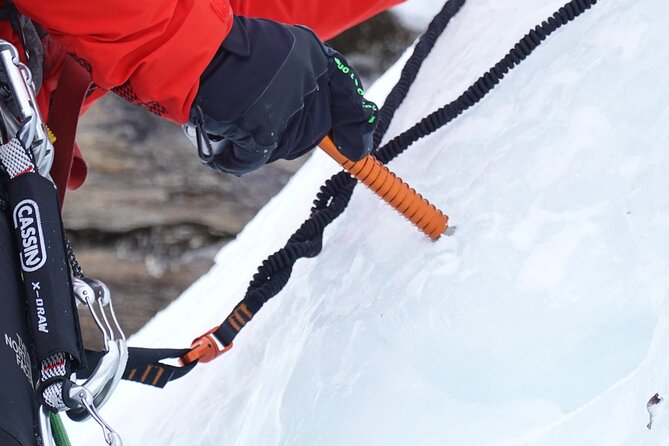
You are a strong match if you want a hands-on Arctic experience and do not mind working for it. The activity suits a first-time climber who is curious, reasonably fit, and willing to follow instructions.
It is also a good choice if you have limited time in Abisko. Pickup removes much of the planning, and the three-hour duration leaves room for other activities on the same day. Choose the morning or afternoon slot that fits your plans, but keep a little space around it in case weather changes the schedule.
You should think twice if you dislike heights, cold outdoor exertion, or activities where you may need several attempts to complete a route. The guide can make the experience safer and more approachable, but cannot make the ice wall flat or remove the physical work.
The activity is offered in English. A maximum of 18 people is listed, though group size can vary. If you want a quiet, almost private lesson, confirm the expected group size before committing.
Booking, timing, and cancellation details
Confirmation is provided at booking, and the experience is available by mobile ticket. The tour is offered in English and is near public transportation, though the listed accommodation pickup is the simplest option for most people staying in the area.
You can cancel for a full refund up to 24 hours before the start time. Changes or cancellations inside that 24-hour window are not accepted for a refund. The cutoff uses local time, so check the clock carefully if you are arranging plans across time zones.
Weather cancellations are treated differently. If the outing cannot run because of poor conditions, you are offered a different date or a full refund. Since ice climbing depends on safe conditions, this policy is a useful protection rather than an inconvenience.
FAQ
Do I need previous ice climbing experience?
No. Previous experience is not needed. A certified guide teaches you the first basic steps of climbing vertical ice.
What equipment is included?
The experience includes alpine boots, crampons, a harness, and a helmet. A certified guide is also included.
How long does the experience last?
The activity lasts approximately three hours.
Where can I be picked up?
Pickup is offered from Abisko Mountain Lodge, abisko.net, Abisko Hostel, Abisko Guesthouse, the STF Mountain Station, Björkliden Hotell Fjället, and Björkliden Gammelgården.
What time are the pickups?
Morning pickups run from 9:30 to 9:50, depending on the accommodation. Afternoon pickups run from 14:00 to 14:20, depending on the accommodation.
What level of fitness do I need?
You should have a moderate level of physical fitness. The climb can be tiring, even though it is suitable for beginners.
Is the activity offered in English?
Yes. The experience is offered in English.
What happens if bad weather cancels the climb?
You are offered another date or a full refund if the experience is canceled because of poor weather. You can also cancel up to 24 hours before the start time for a full refund.
Should you book this ice climb?
Book it if you want to do more in Abisko than admire the snow from a path or window. This experience gives you a clear challenge, real equipment, a certified guide, and a short transfer from your accommodation. The patient coaching associated with guides such as Anna, Axel, and Aril is especially valuable for first-timers who feel unsure at the base of the ice.
Skip it if you want a gentle outing, have limited physical stamina, or cannot keep your schedule flexible for weather. For everyone else, the $125.93 cost buys a memorable three hours and a rare chance to say you climbed a frozen waterfall in the Arctic. That is a strong use of time in Abisko.
Just added around Sweden
- Wilderness Tour with Snowmobile & Ice Fishing★ 4.9 · 28 reviews
- World War II Stockholm Old Town Walking Tour and Army Museum★ 4.6 · 4 reviews
- Vaxholm & Stockholm Archipelago: Guided Excursion, Day Trip★ 4.8 · 41 reviews
- West Sweden: Sea Kayak Delight in Nature Reserves★ 5.0 · 6 reviews
- Stockholm: Archipelago Guided Boat & Walking Tour of Vaxholm★ 3.1 · 23 reviews
- Uppsala Must See 2h city walk – 2h tour of all big attractions!★ 5.0 · 4 reviews
- Stockholm: Underground Metro Art Ride with a Local Guide★ 4.6 · 39 reviews
- Self-Guided Audio Walking Tour Through Kurt Wallander’s Ystad★ 3.5 · 12 reviews
Guided, compared.
City Archipelago Sightseeing Cruise with Guide
Read our review →
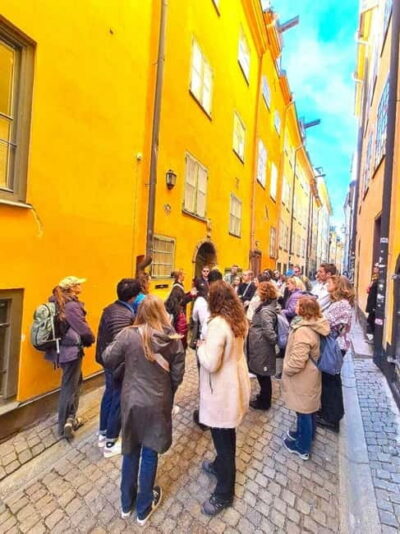
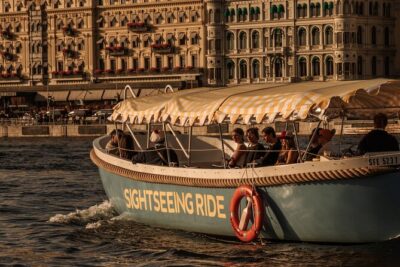
Open Electric Boat Ride in Stockholm with Live-Guide
Read our review →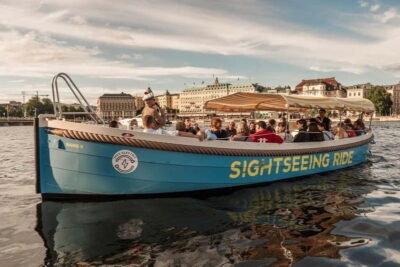
Guided City Sightseeing Open Electric Boat Tour
Read our review →
Vasa Museum Guided Tour, Including Ticket & Guide
Read our review →