
Reviewed · GOTHENBURG TOURS
Haga Sightseeing Tour
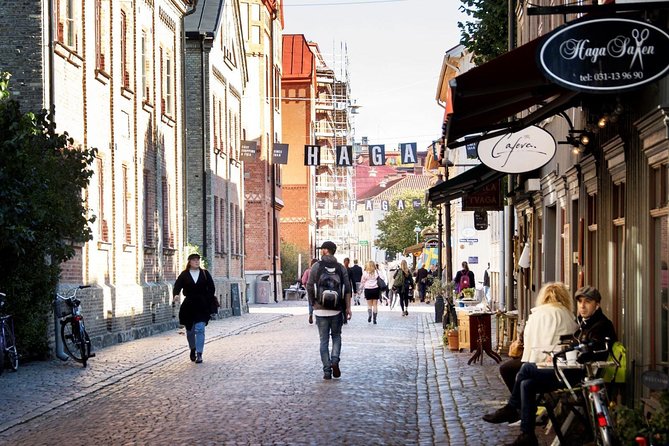
Haga’s appeal is easy to grasp: this old Gothenburg neighborhood puts you among preserved timber houses, small shops, and cafés in the space of a short walk. The tour focuses on Haga Nygata and the stories behind its well-kept streets, rather than rushing you between far-flung sights.
I like the small maximum group of 15, which should make it easier to hear the guide and ask questions. I also like the chance to learn about both Haga and everyday Swedish life, something guides such as Kalina and Sarah have done especially well. The main drawback is the price, $56.21 for about 90 minutes, which feels high if you only want a quick look at the neighborhood.
Key points
- Haga dates to the mid-17th century, making it one of Gothenburg’s oldest neighborhoods.
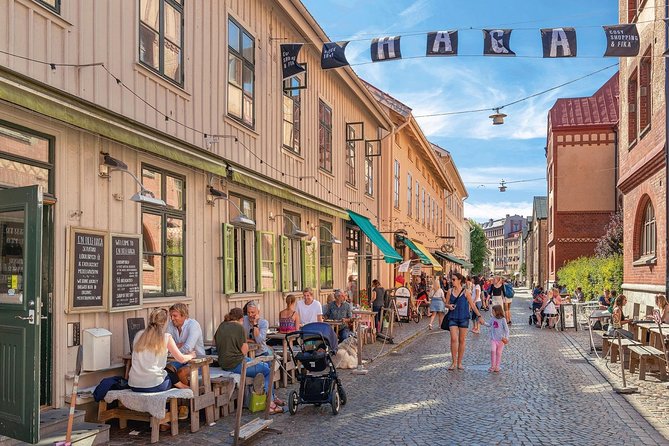
- Haga Nygata is the main focus, with timber houses, cafés, and boutique shops along the walking route.
- English-speaking guides add personal stories, with Kalina and Sarah praised for clear explanations and open answers.
- A group of up to 15 people offers a more manageable setting than a large city walk.
- The tour begins and ends at Haga Church, making the meeting point simple to use.
- Free cancellation is available up to 24 hours before departure, with weather-related changes handled by the operator.
Why Haga Nygata makes a good first look at Gothenburg
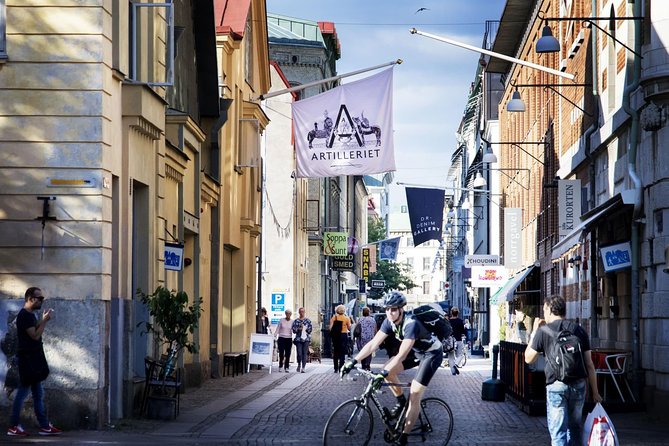
Haga is one of the best parts of Gothenburg for seeing the city at walking pace. The neighborhood dates to the mid-17th century and is known for its preserved timber houses, pleasant cafés, and independent shops. That gives the tour a clear sense of place from the start.
I like tours that use one compact neighborhood well. You are not spending half the time getting from one sight to another. Instead, the guide can point out details in the buildings and streets while explaining how Haga fits into Gothenburg’s past.
The route centers on Haga Nygata. Its timber buildings give the area a distinct look, and the shops and cafés make it feel like a lived-in neighborhood rather than an open-air museum. You can expect the guide to connect the physical setting with stories about the people and events that shaped Haga.
The description promises an exploration of the mysteries behind the buildings. That wording suggests the tour is not just a photo walk. You should expect stories and explanations about why the houses matter, how the neighborhood developed, and what makes Haga different from other parts of Gothenburg.
A few more Gothenburg half-days to weigh up
- Gothenburg: Archipelago cruise with guide
★ 4.3 · 1,002 reviews - Gothenburg: City Canal Sightseeing Cruise
★ 4.7 · 470 reviews - Gothenburg: Go City All-Inclusive Pass with 20+ Attractions
★ 3.8 · 222 reviews
Starting at Haga Church
The tour begins at Haga Church, at Haga Kyrkoplan, 411 23 Göteborg. This is useful for planning because the meeting point is fixed and the tour returns there at the end. You do not need to work out a second pickup location after the walk.
Haga Church also places you directly in the neighborhood rather than at a distant city-center meeting point. The area is near public transportation, so you can reach it without relying on a private car. The supplied information does not specify which transit lines to take, so check the route from your hotel or ship terminal before setting out.
Arrive with enough time to find Haga Kyrkoplan. A walking tour is easier when you are not trying to locate the guide at the last second. Confirmation is sent when you book, so keep that information available on your phone.
The 90-minute walk through old timber streets
The full experience lasts about one hour and 30 minutes. That is long enough for a proper introduction to Haga, but short enough to fit into a day of sightseeing in Gothenburg.
The stated stop is Haga Nygata, though the tour is described as an exploration of the neighborhood’s houses, shops, and cafés. In practical terms, you should think of this as a focused area walk rather than a tour with several separate admissions or indoor attractions.
That format has two advantages. First, the guide can give attention to small details that are easy to miss when you walk alone. Second, you can keep your bearings. Haga is compact enough that the tour remains easy to follow, and the walk ends where it began.
The trade-off is that the itinerary is not packed with many named sights. If you want entry to museums, churches, or historic interiors, this is not that kind of experience. The attraction is the neighborhood itself and the explanation that comes with it.
What the timber houses add to the experience
Haga’s wooden buildings are the central reason to take this walk. Anyone can pass through an old street and admire its color and shape. A good guide helps you notice why the buildings survived, how they relate to one another, and what they tell you about Gothenburg.
The supplied information does not give a detailed architectural program, so I would not book this expecting a technical lecture on every façade. Instead, expect a broader reading of the area, with the guide using the preserved houses as a doorway into local history.
This is where a small group matters. With no more than 15 people, you should have a better chance of hearing the explanation in narrow streets and stopping without blocking a large crowd. It also leaves room for questions, which several past participants valued.
A guide can make the same street feel very different from one visit to the next. Sarah, for example, was praised for bringing Haga’s past to life and for answering questions even when they moved slightly away from the main subject. That is a useful quality on a neighborhood walk, where curiosity often leads from a building to a wider question about the city.
Same city, a completely different kind of day:
- Gothenburg: City Sightseeing Hop-On Hop-Off Bus Tour
★ 3.8 · 206 reviews - Gothenburg: Haga Old Town Walking Tour
★ 4.5 · 205 reviews - Landvetter Airport Bus Transfer Departure
★ 3.5 · 158 reviews - Landvetter Airport Bus Transfer Arrival
★ 3.5 · 117 reviews
More than old buildings: Swedish life and Gothenburg today
One of the strongest features of this experience is its wider scope. The guide does not only talk about Haga. Kalina was singled out for explaining Swedish life along with the neighborhood and Gothenburg’s past.
That matters because a historic district can become flat if every story is locked in the past. Connections to daily life give the walk more use for someone visiting Sweden for the first time. You can ask questions, compare local customs with home, and get a better sense of how the old neighborhood fits into the present city.
I would make good use of the question period. Ask about the buildings, Gothenburg, Swedish people, or places to eat. One guide gave a seafood recommendation, which could be useful if you want to plan a meal after the walk. The information does not identify the restaurant, so treat this as a chance to ask for a current suggestion rather than a guaranteed dining stop.
The range of guide styles may vary. Kalina and Sarah received especially warm praise, and other guides may lead the tour at different times. The consistent benefit should be the English-language access to Haga, but the personal touch can depend on who is assigned.
Why the group size of 15 matters
A maximum of 15 participants is a real practical advantage. Large walking groups often make it hard to hear, ask questions, or stay close to the guide. This tour sets a more personal limit.
The group may still be smaller. Several bookings have ended up with only one or two people, creating something close to a private walk without the cost of hiring a private guide. That cannot be promised, but it is worth understanding as a possibility.
If the group is full, 15 people remains a reasonable number for a neighborhood tour. You should still expect to walk at the pace of the group and share the guide’s attention. The size is not a promise of private service.
I would choose this format over a large bus-style sightseeing trip if Haga is a priority. You get closer to the streets, and the guide can respond to individual questions. If you prefer exploring alone, you could walk Haga Nygata without booking, but you would miss the organized storytelling and the chance to ask a local guide about what you are seeing.
Assessing the $56.21 price
At $56.21 per person, this is not a bargain-priced orientation walk. The tour lasts about 90 minutes, and the listed program does not include paid admissions, food, or drinks. You are paying mainly for the guide’s time, language, local interpretation, and the convenience of a planned route.
That can be fair value if you want context. Haga is easy to stroll through, but the point of this activity is to understand the neighborhood rather than simply photograph it. The price makes more sense for a first visit, a short stay, or anyone who enjoys asking questions and hearing local stories.
It is harder to justify if you only want to see the timber houses and shopfronts. You can explore the public streets independently, and the tour does not include a meal or an indoor attraction. Group discounts may improve the cost for a party booking together.
I would think of the price as a compact introduction to Haga, not a full-day Gothenburg tour. If you have limited time and want one guided neighborhood experience, the cost may fit your plans. If you are staying several days and enjoy self-guided walks, you may prefer to visit Haga on your own and spend the money elsewhere.
Who will get the most from this walk

I would recommend the tour to first-time visitors who want a clear introduction to Gothenburg without committing to a long excursion. The 90-minute length is easy to fit before lunch, after arrival, or between other plans.
It also suits anyone interested in historic streets, traditional buildings, and local stories. The experience is not aimed only at architecture fans. The guides have discussed Swedish life, Gothenburg, and local food, so you can make it as broad as your questions allow.
The walk should work for most participants, and service animals are allowed. The information says most people can participate, but it does not give details about step-free access, walking distance, or seating. If you have specific mobility needs, contact the provider before booking rather than assuming the route will suit you.
Families and mixed-age groups may appreciate the short duration, though no child-specific content is listed. Solo visitors can also benefit from the small-group setting, particularly if the guide has time for conversation.
Timing, weather, and practical planning

The experience requires good weather. If poor weather causes a cancellation, you are offered another date or a full refund. That policy is helpful in Gothenburg, where rain can change the comfort of an outdoor walk quickly.
You can cancel for a full refund up to 24 hours before the local start time. Cancellations or changes made inside that window are not accepted and are not refunded. I would avoid booking this too tightly around a flight, train, or cruise departure, since the walk takes place outdoors and meeting-point timing matters.
The tour is offered in English. Confirmation arrives at booking, and the activity returns to Haga Church. Since there are no listed admissions or meal stops, bring your own water and plan any café visit separately. The cafés are part of the neighborhood’s appeal, but they are not included in the tour price.
My verdict on the Haga experience
I like this tour because it keeps its promise focused. You spend 90 minutes in one of Gothenburg’s oldest neighborhoods, seeing preserved timber houses and learning how Haga connects to the wider city. The English-speaking guide, small group limit, and open question format give the walk more substance than a quick self-guided pass through Haga Nygata.
The price is the main question. At $56.21, you should want interpretation, not just scenery. Book it if you value local stories, want help getting oriented, or enjoy a guide who can move from architecture to Swedish life and food suggestions.
Skip it if you are happy to walk independently and only need photographs of the buildings and cafés. For everyone else, especially first-time visitors with a short Gothenburg stay, this is a focused and personable way to get to know Haga.
FAQ
Where does the Haga Sightseeing Tour begin?
It begins at Haga Church, also called Haga Kyrka, at Haga Kyrkoplan, 411 23 Göteborg, Sweden.
Where does the tour end?
The activity ends back at the meeting point at Haga Church.
How long does the tour last?
The tour lasts approximately one hour and 30 minutes.
What language is the tour offered in?
The tour is offered in English.
What neighborhood does the tour visit?
The tour explores Haga, with Haga Nygata listed as the main stop.
What can I see during the walk?
You can expect to see preserved timber houses, boutique shops, and cafés while learning about Haga and Gothenburg.
How large can the group be?
The tour has a maximum of 15 participants.
Is the meeting point near public transportation?
Yes. The meeting point is near public transportation.
Are service animals allowed?
Yes, service animals are allowed.
Can I cancel for a full refund?
Yes. You can cancel at least 24 hours before the experience start time for a full refund.
What happens if bad weather cancels the tour?
If poor weather causes a cancellation, you are offered a different date or a full refund.
Just added around Gothenburg
- Explore the Instaworthy Spots of Gothenburg with a Local★ 5.0 · 3 reviews
- Gothenburg : Private Walking Tour with A Guide (Private tour)★ 4.0 · 19 reviews
- Private Boat Ride in Gothenburg with pickup★ 4.0 · 9 reviews
- Historical Walking Tour in Restaurant and Bars in Central City★ 5.0 · 9 reviews
- Discover Gothenburg’s most Photogenic Spots with a Local★ 4.5 · 7 reviews
- Guided Brewery Tour on Bicycle★ 5.0 · 5 reviews
- Guided boat tour to Vinga in Gothenburg★ 3.5 · 8 reviews
- 24h Gothenburg Hop-On Hop-Off Boat Tour★ 4.5 · 18 reviews
Gothenburg Tours, compared.



Go City All-Inclusive Pass with 20+ Attractions
Read our review →




Browse the lists this tour appears in